Will Chinese Investments Gallop Ahead in Year of the Horse?
The Lunar New Year kicks off today, on February 17, marking the arrival of the Year of the Horse in China and various other countries that adhere to the lunar calendar traditions.
In the realm of Chinese astrology, the horse symbolizes vibrant energy, unwavering ambition, and remarkable endurance achieved through consistent and persistent efforts over time.

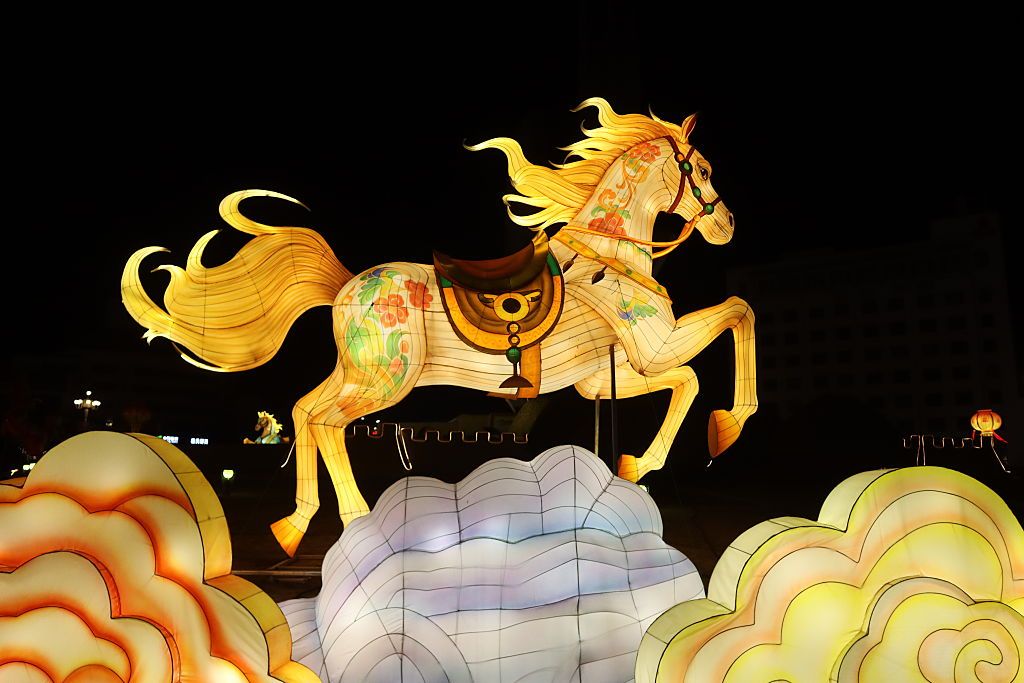
Spring Festival celebrations in Chongqing herald the arrival of the Year of the Horse.
Although no significant stimulus measures have been rolled out alongside these festivities, the strong focus on boosting consumer spending could prove beneficial for China’s overall economic prospects, according to Stuart Rumble, who serves as the head of investment directing for the APAC region at Fidelity International.
Rumble explains, “The primary goal here is to restore public confidence and enhance the quality of economic growth, rather than sparking a fleeting, short-term boom. This approach suggests potential for targeted gains in specific areas, as opposed to a widespread economic rebound across all sectors.”
“In this environment, sectors tied to consumer demand are trading at some of the most attractive valuations available in the market, largely because investor expectations for them are still quite muted. This situation opens up selective investment opportunities. For instance, in fields like travel, sportswear, and select discretionary consumer products, leading domestic companies are steadily capturing greater market share while capitalizing on enduring trends of low market penetration over the long haul.”
What insights do industry experts offer regarding the primary influences that will shape China’s economy throughout the Year of the Horse? Furthermore, which specific sectors do they recommend investors focus on to maximize potential profits?
Investing in China: A Wild Horse on the Horizon?
The lead-up to the Year of the Horse unfolded with considerable political turbulence, resembling a chaotic gallop. Toward the end of January, China’s highest-ranking military official, General Zhang Youxia, was abruptly removed from his position amid a sweeping purge. This action has dwindled the membership of the country’s Central Military Commission—typically comprising seven members—to only two, including President Xi Jinping himself.
“This development signifies one of the most profound disruptions in China’s political landscape in several decades,” noted Daniel Casali, chief investment strategist at Evelyn Partners. “The swift pace of this purge is without precedent in the intricate world of Chinese elite politics, where officials who are sidelined usually disappear from view for extended periods before any official rationale is provided.”
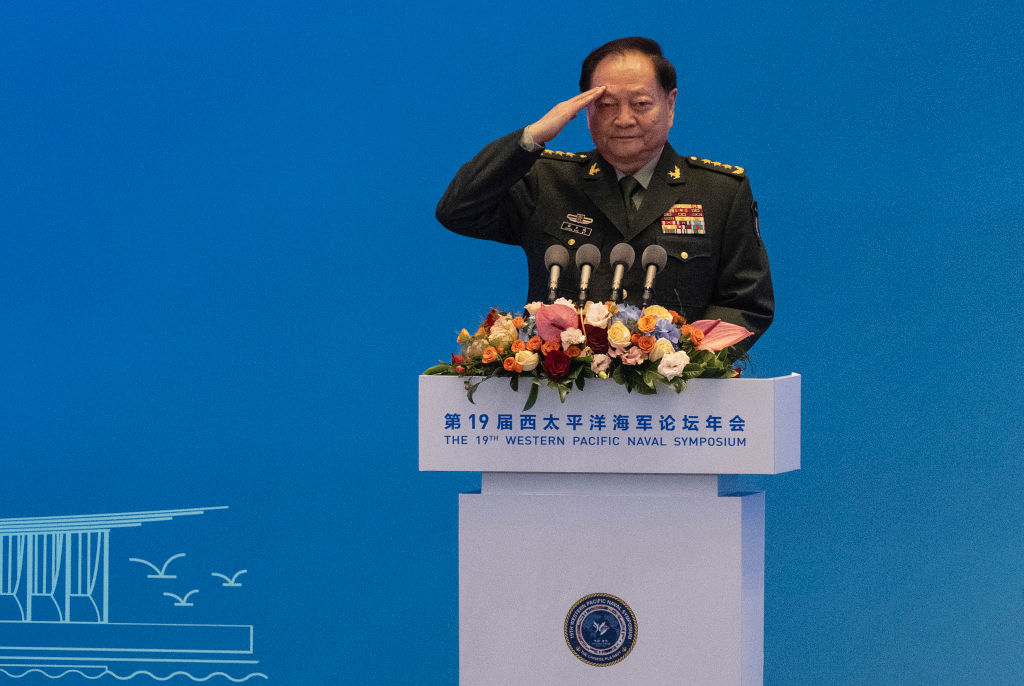
General Zhang Youxia is pictured saluting during the opening of the Western Pacific Naval Symposium in April 2024.
This purge highlights a breakdown in the delicate equilibrium among various factions within the ruling Chinese Communist Party. “Considering the inherent lack of transparency in China’s political sphere, coupled with the absence of a defined succession plan for President Xi, this heightened political uncertainty sparks worries about effective governance. Such concerns could negatively impact investor confidence,” Casali observed. “For investors, the primary risk lies in how this internal political volatility might suppress valuations and performance in regional equity markets.”
That said, Casali pointed out that Chinese and emerging market stock indices have largely overlooked this political unrest up to now. Instead, their movements are predominantly fueled by robust earnings growth from underlying companies, set against a favorable global economic environment.
China’s Thriving AI Landscape
A major force propelling China’s market advances over the past year was the rise of DeepSeek, a breakthrough that sent shockwaves through Western stock markets and wiped out almost $600 billion from Nvidia’s market capitalization in just one trading day.
“The ‘DeepSeek moment’ served as a crucial turning point, prompting a comprehensive reappraisal of valuations across China’s entire AI sector,” commented Yang.
“The financial markets have not yet fully grasped the extraordinary speed at which China’s homegrown AI ecosystem is advancing despite various limitations. This includes innovative architecture designs, widespread adoption of open-source technologies, and a pragmatic engineering approach that can scale rapidly when backed by deliberate capital allocation and supportive government policies,” stated Nicholas Yeo, head of China equities at Aberdeen Investments. “We anticipate witnessing further examples of how firms are transforming clever workarounds into viable commercial products, which are then embraced and integrated broadly throughout the ecosystem.”
When evaluating opportunities in China’s AI ecosystem, a critical consideration is the current valuation levels, “particularly following the sharp price surges in numerous ‘pure play’ AI stocks, where pathways to profitability and reliable earnings streams may remain several years out,” Rumble advised.
“Companies providing core infrastructure and large-scale platforms are beginning to generate revenue sooner, whereas many firms centered on specific AI applications are still heavily investing in growth. In certain instances, their valuations seem to price in future cash flows that could take considerable time to become reality,” Rumble elaborated.
Yang highlights China’s technology behemoths Tencent and Alibaba as prime candidates to reap the greatest rewards from the nation’s fast-evolving AI landscape. “Their robust cloud computing infrastructure, combined with the swift incorporation of cutting-edge AI models, has solidified their positions as the bedrock supporters of China’s burgeoning AI infrastructure,” Yang remarked.
China’s Expanding Dominance in Advanced Technologies
Last year, China further entrenched its position as the worldwide frontrunner in electric vehicles, with homegrown producer BYD surpassing Tesla to claim the title of the planet’s top EV manufacturer.
“China boasts the largest and most fiercely competitive electric vehicle market globally, characterized by elevated adoption rates and domestic brands that have expanded explosively thanks to intricate supply networks and accelerated product development cycles,” Rumble explained.
The country is also forging ahead in robotics. “Faced with a contracting workforce of working-age individuals, automation emerges as both an economic imperative and a top policy focus for China,” Rumble noted. Nevertheless, he urged caution, emphasizing that much of the anticipated growth is already reflected in the share prices of these nascent enterprises in the sector.
“The real challenge for investors is distinguishing genuine technological breakthroughs from the capacity for sustained profitability, while remaining vigilant about the premiums being paid to gain exposure to these exciting themes,” Rumble stressed.
Strategies for Investing in China Throughout the Year of the Horse
Those looking to position themselves in China for the Year of the Horse have access to a diverse selection of funds and investment trusts dedicated to the region.
Among investment trusts, three stand out for their emphasis on Chinese equities: Baillie Gifford China Growth, Fidelity China Special Situations, and JPMorgan China Growth & Income. In the year ending February 16, Fidelity China Special Situations posted the strongest share price performance, rising 30.9%, outpacing Baillie Gifford China Growth’s 22.1% gain and JPMorgan China Growth & Income’s 22.7%, based on Morningstar data provided by the Association of Investment Companies.
Keep in mind that additional investment trusts, such as Invesco Asia Dragon, offer exposure to China alongside investments in other interconnected Asian markets.
FE fundinfo data reveals that the top-performing China-focused funds over the year to February 16 were the Invesco ChiNext 50 UCITS ETF with a 61.1% return, followed by the T. Rowe Price China Evolution Equity Fund at 38.2%, and the Allianz China A-Shares Equity Fund at 35.0%.