US Investors Fuel India’s AI Boom at Delhi Summit
India’s artificial intelligence infrastructure is receiving substantial support from U.S. investors and major technology companies, precisely as top global tech executives gather in New Delhi for one of the most significant AI summits worldwide.
On Monday, Blackstone revealed it is spearheading a $600 million equity funding round for the Indian AI cloud startup Neysa. At the same time, the prominent chipmaker AMD disclosed an enhanced collaboration with Mumbai-headquartered Tata Consultancy Services to roll out as much as 200 megawatts of AI infrastructure capacity across India.
Blackstone’s substantial multi-million-dollar infusion into Neysa will enable the deployment of over 20,000 GPUs dedicated to AI training within India. Meanwhile, the AMD-TCS partnership is designed to bolster India’s sovereign AI programs and expedite the rollout of AI solutions for enterprises. The funding for Neysa also involves contributions from investors such as Teachers’ Venture Growth, TVS Capital, 360 ONE, and Nexus. Additionally, the startup is pursuing another $600 million through debt financing to further its expansion.
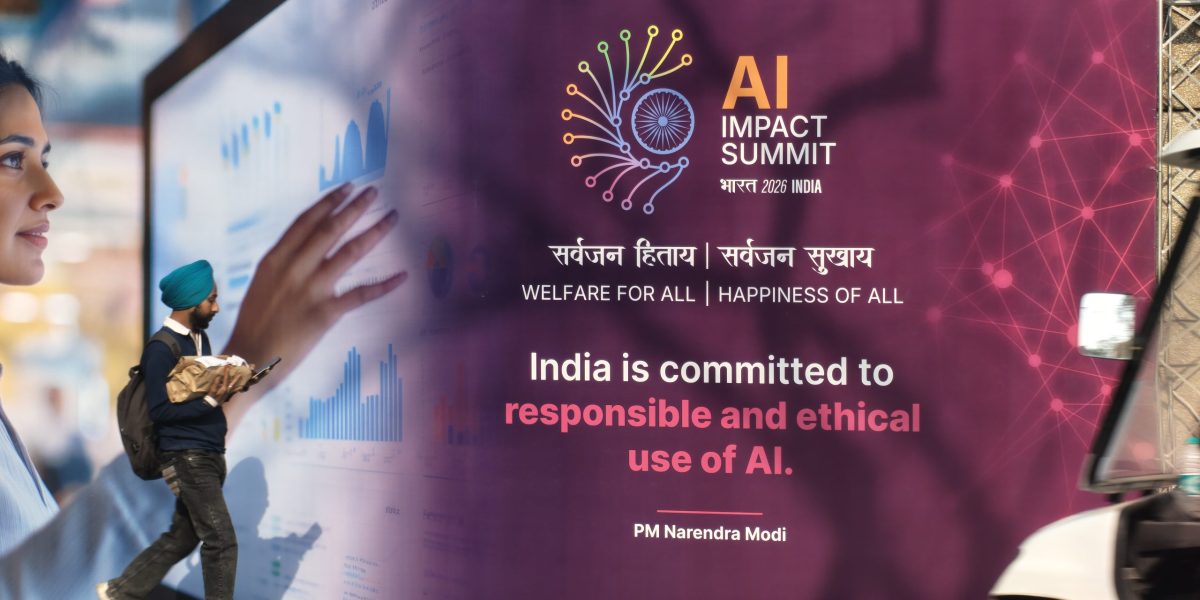
These financial commitments are perfectly timed with the launch of the five-day India AI Impact Summit, which began on Monday. This prestigious event brings together prominent figures in the AI field from around the globe, including OpenAI’s Sam Altman, Anthropic’s Dario Amodei, Google’s Sundar Pichai, and Meta’s Alexandr Wang. Political heavyweights are also in attendance, such as French President Emmanuel Macron. Organizers anticipate participation from more than 20 heads of state and government, as well as delegates from over 60 nations. The lineup also features key European AI innovators, like Arthur Mensch, the French computer scientist and founder of Mistral AI.
AI enterprises are leveraging the summit to showcase their expansion into non-Western regions. This week, Anthropic highlighted that India has emerged as the second-largest market for its Claude AI platform, with its run-rate revenue having doubled since October 2025. In a separate development, OpenAI CEO Sam Altman shared in the Times of India that India now boasts 100 million weekly active ChatGPT users, positioning it as the company’s second-biggest user base globally, trailing only the United States.
On Monday, Anthropic further announced the establishment of its second office in Asia, located in Bengaluru, under the leadership of Managing Director Irina Ghose. This new hub will prioritize recruiting local talent and assisting Indian businesses in developing solutions powered by Claude. The India team is set to provide specialized applied AI knowledge to enterprise clients, digital-native companies, and startups. Their services will encompass designing, constructing, and scaling customized Claude-based applications that align precisely with specific business requirements and objectives.
India advocates for “AI Commons”
The government under Prime Minister Modi intends to utilize the summit as a platform to promote the concept of a “global AI commons.” This initiative envisions a collaborative, shared repository of AI applications and practical use cases, particularly targeting sectors like education, healthcare, and agriculture. Such resources could be readily adopted and implemented by developing countries to address their unique challenges.
Abhishek Singh, the chief executive overseeing India’s AI mission, explained to The Financial Times that the nation seeks to prevent AI capabilities and standards from evolving into “private infrastructure controlled by a few companies.” This stance underscores wider geopolitical apprehensions regarding the excessive concentration of cutting-edge AI development in just the U.S. and China.
India stands in an advantageous position to harness the ongoing AI surge. It currently holds the third spot worldwide in AI competitiveness, following only the United States and China, as per rankings from Stanford University’s Institute for Human-Centered AI. The country has demonstrated remarkable prowess in utilizing its robust digital infrastructure, which includes a biometric identification system encompassing more than a billion citizens, to swiftly expand technology adoption across the population. Government leaders now firmly believe that integrating AI will propel the country’s technological progress at an even more accelerated pace, potentially transforming its development trajectory in profound ways.