UK Spring Statement 2026: Date and Key Expectations
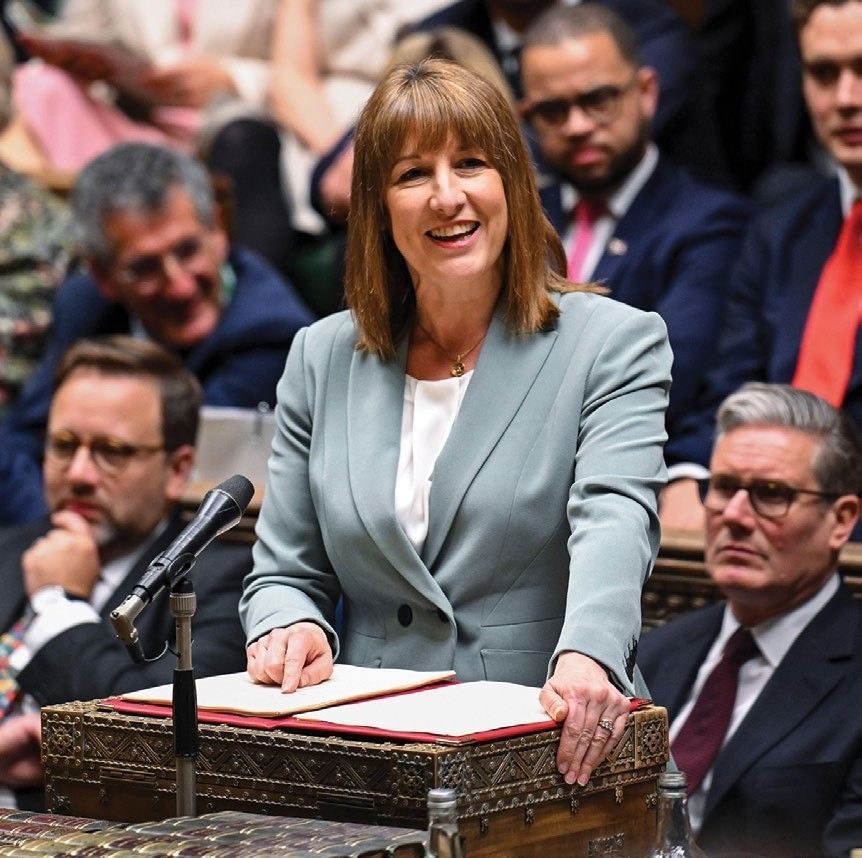
Chancellor Rachel Reeves is scheduled to deliver a comprehensive update on the United Kingdom’s economic landscape during the upcoming Spring Statement. She will present this information directly to the House of Commons, where she will engage with and respond to the latest economic projections provided by the Office for Budget Responsibility (OBR). These projections encompass critical areas such as economic growth, inflation rates, government expenditure levels, and anticipated tax revenues.
The Spring Statement serves as an annual governmental briefing that offers a detailed overview of the current condition and future trajectory of the UK economy. This event is complemented by an extensive report from the OBR, which provides forward-looking forecasts for the economy across the forthcoming years. The report also evaluates the impacts of policies that have been previously announced, helping to illustrate their ongoing effects on economic performance.
Established in 2010, the Office for Budget Responsibility operates as an independent entity dedicated to scrutinizing the UK’s public finances. It generates two primary economic forecasts each year: one released in conjunction with the Spring Statement and the other accompanying the main Budget. In addition to forecasting, the OBR plays a vital role in assessing the government’s progress toward meeting its established fiscal targets, commonly referred to as fiscal rules.
At present, the government’s two primary fiscal rules stipulate that borrowing must not be used to cover day-to-day operational spending, and overall national debt must be on a downward trajectory as a proportion of the economy by the 2029/30 financial year. Historically, the OBR conducted these fiscal rule assessments twice annually, aligning with each of its forecasts. However, a policy shift announced during the 2025 Autumn Budget has altered this practice. Moving forward, such evaluations will occur only once per year, specifically alongside the Budget statement.
The Spring Statement for 2026 is set to take place on March 3, though the precise timing of Chancellor Reeves’ address to the House of Commons remains to be confirmed at this stage.
What to Anticipate from the 2026 Spring Statement?
Analysts do not foresee Chancellor Reeves introducing any significant policy alterations or major announcements during this Spring Statement. Instead, she plans to reserve such substantial changes for the primary Budget presentation. This strategic approach reflects her desire to limit major tax and spending declarations to a single annual event. By doing so, she aims to reduce market speculation, provide greater predictability for financial markets, and foster a more stable economic environment.
Current State of the UK Economy
The Labour government has positioned economic growth enhancement as one of its utmost priorities. Stronger growth is expected to elevate living standards and improve the overall quality of life for UK residents. Nevertheless, recent indicators suggest that growth momentum may be faltering. According to the most recent data from the Office for National Statistics (ONS), the UK’s Gross Domestic Product (GDP) expanded by a modest 0.1% during the final quarter of 2025. Over the entire course of 2025, however, GDP growth reached 1.3%, indicating some resilience despite the slowdown.
Inflation, measured by the Consumer Price Index (CPI), currently stands at 3%. While this represents a decline from the 3.8% recorded in September 2025, it remains above the government’s target of 2%. Unemployment rates have also risen sharply, reaching 5.2% over the three months ending December 2025—the highest level since 2021. For young people aged 16 to 24, the unemployment rate hit 16.1% during the same period, marking the highest figure since 2014, per ONS statistics.
On a more positive note, wage growth persists. Weekly earnings, excluding bonuses, increased by 4.2% annually from October to December 2025, outpacing the inflation rate and providing some relief to households. Furthermore, recent fiscal data highlights a notable surge in tax revenues, resulting in a government budget surplus of £30.4 billion for January. The ONS noted that this figure exceeded January 2025’s surplus by £15.9 billion and stands as the largest unadjusted surplus since monthly records commenced in 1993. These developments offer a mixed but cautiously optimistic picture as the Spring Statement approaches.