Ring Ends Flock Safety Partnership After Super Bowl Ad Backlash
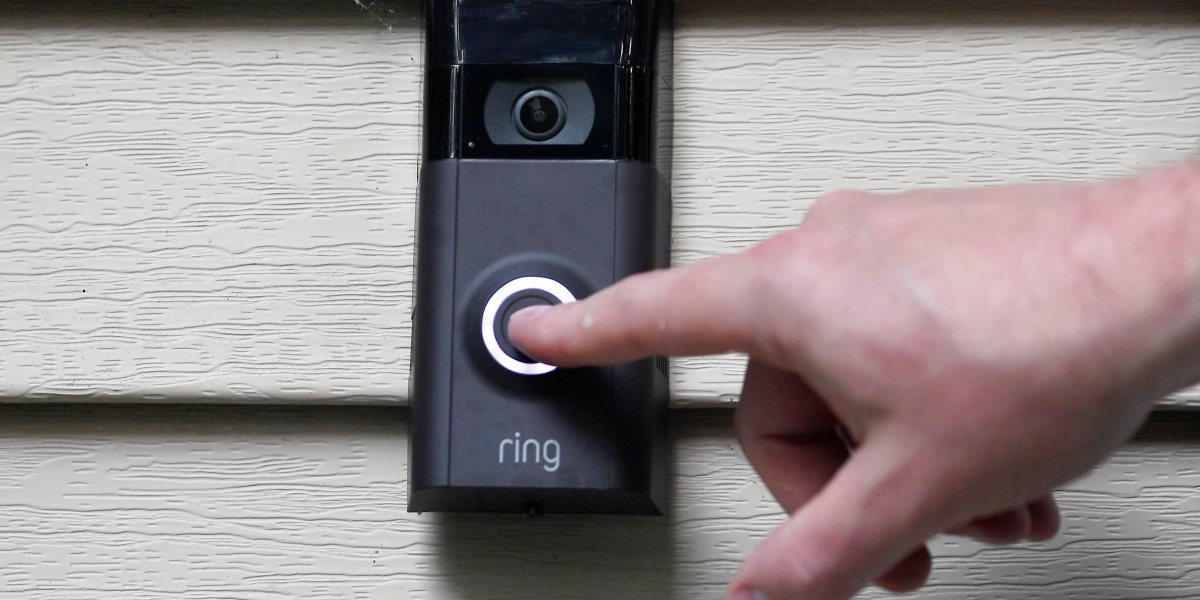
Amazon’s Ring, the popular manufacturer of smart doorbells, has officially ended its collaboration with Flock Safety, a firm specializing in police surveillance technology.
This decision comes in the wake of significant public backlash triggered by a 30-second advertisement from Ring that was broadcast during the Super Bowl. The commercial showcased a scenario where a lost dog is located using a network of cameras, which ignited widespread concerns about the emergence of a dystopian surveillance state.
Importantly, the advertised feature known as Search Party had no direct connection to Flock Safety. Furthermore, Ring’s official announcement regarding the termination did not explicitly reference the Super Bowl advertisement as the catalyst for what both companies described as a mutual agreement to cancel the partnership.
Last year, Ring and Flock Safety had publicly announced their intention to collaborate, aiming to enable Ring camera users to voluntarily share their video recordings in response to formal requests from law enforcement. These requests would be processed through Ring’s existing Community Requests functionality.
In a detailed statement, Ring explained, “Following a comprehensive review, we determined the planned Flock Safety integration would require significantly more time and resources than anticipated.” The company emphasized that the integration was never actually implemented, meaning that no customer videos from Ring devices were ever transmitted to Flock Safety.
Flock Safety echoed this confirmation, stating that it never received any videos from Ring customers. The company described the decision to halt the integration as a joint one, allowing each entity to better focus on serving their individual customer bases. Flock also reaffirmed its commitment to providing law enforcement agencies with tools that can be fully customized to comply with local laws and regulations.
Flock Safety operates one of the largest networks of automated license plate recognition systems in the United States. Its cameras are installed in thousands of communities nationwide, snapping billions of license plate images every month. The company has encountered substantial public criticism, particularly during the Trump administration’s intensified immigration enforcement efforts. Nevertheless, Flock Safety insists that it does not engage in partnerships with Immigration and Customs Enforcement (ICE) or any subagencies under the Department of Homeland Security for direct camera access. Last year, the firm suspended pilot programs with Customs and Border Protection and Homeland Security Investigations.
According to Flock Safety, it does not claim ownership of the data captured by its cameras; rather, the customers who deploy them retain control. Consequently, if a local police department decides to share data with a federal agency such as ICE, Flock Safety has no mechanism to intervene or override that choice, as noted on the company’s website.
Apart from the partnership with Flock Safety, Amazon’s Ring doorbell cameras have drawn scrutiny over various surveillance-related issues in the past.
The Super Bowl advertisement highlighted Ring’s Search Party feature, which the company promotes as a tool capable of reuniting lost pets with their owners and monitoring wildfires that pose threats to local communities. In the video, artificial intelligence is used to track the dog’s movements across multiple neighborhood cameras.
Social media platforms lit up with viewer reactions, many labeling the ad as creepy and dystopian. Numerous people expressed fears that such technology could be repurposed to monitor human movements, prompting declarations that they would disable the feature immediately.
This week, the Electronic Frontier Foundation, a nonprofit organization dedicated to safeguarding civil liberties in the realm of digital technology, voiced strong concerns. It urged Americans to be alarmed by the implications for personal privacy. The group pointed out, “Amazon Ring already incorporates biometric identification technologies, such as facial recognition, through features like ‘Familiar Faces.’ This relies on scanning faces detected by the camera and comparing them to a predefined list of authorized individuals.” The Foundation warned that it would not be difficult for Ring to merge facial recognition with neighborhood-wide search capabilities in the future.
Massachusetts Democratic Senator Edward Markey has also called on Amazon to abandon its “Familiar Faces” technology entirely. In a formal letter to Amazon CEO Andrew Jassy, Markey highlighted how the negative response to the Super Bowl ad underscored broader public resistance to Ring’s pervasive monitoring and intrusive image recognition systems.