
Retiring Boomer & Gen X Leaders to Revive Remote Work Era
Are you longing for the days of remote work during the pandemic? Hold on for another ten to twenty years, and it could once again become the standard practice in many workplaces. Currently, leaders from the baby boomer and Generation X cohorts might be prevailing in the push to return to the office, but fresh data indicates that this dominance is merely temporary and fleeting.
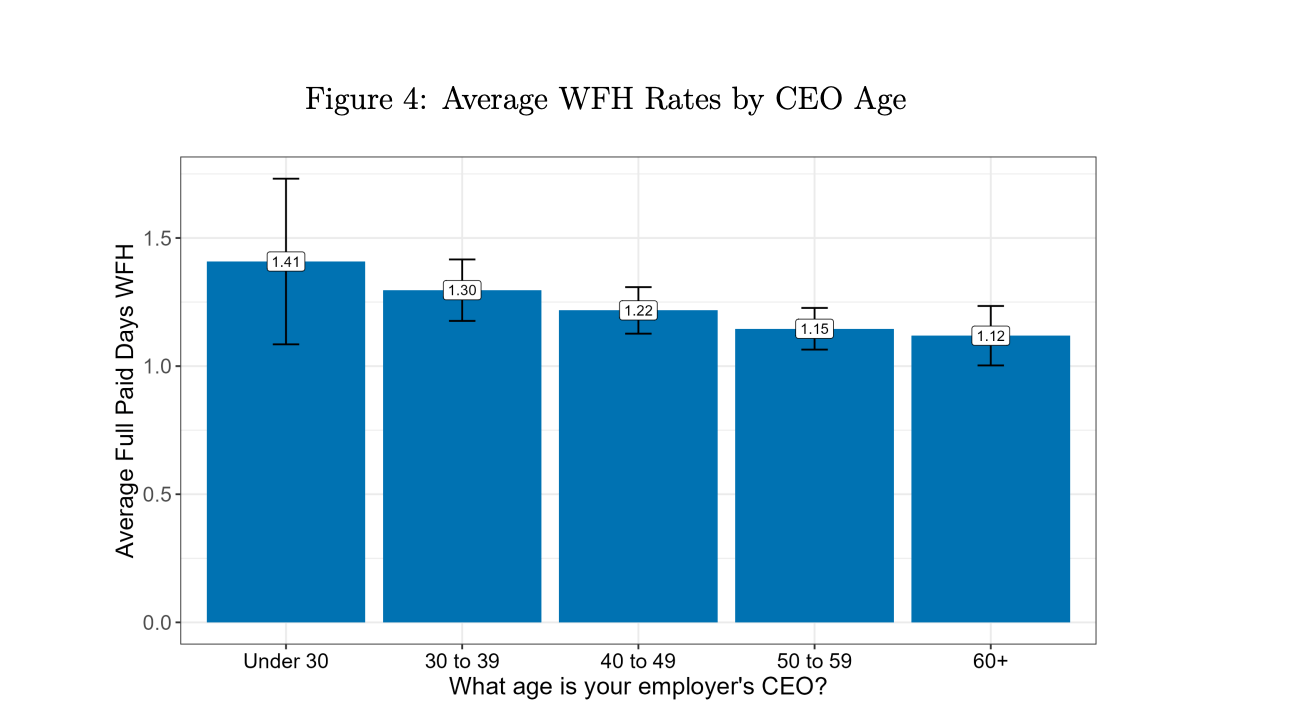
A comprehensive analysis by the National Bureau of Economic Research reveals that executives from the millennial and Generation Z generations are substantially more inclined to permit their teams to operate remotely compared to their elder peers. As these younger leaders ascend to positions of power, they are expected to carry forward their strong preference for adaptable work arrangements, reshaping the professional landscape significantly.
The study involved detailed monthly surveys of 8,000 American employees between the ages of 20 and 64 throughout the year 2025. From this extensive dataset, two key patterns emerged consistently regarding flexible work policies: workers at companies established more recently and those led by younger chief executive officers dedicate considerably more hours to remote work each week.
The researchers articulated their findings clearly, stating, ‘Firstly, staff members engage in remote work far more frequently at newer organizations—nearly double the rate at firms launched after 2015 versus those established prior to 1990.’ They further noted, ‘Secondly, remote work prevalence is higher at companies helmed by younger CEOs.’
Examining the data more closely, it becomes evident that as the age of the CEO decreases, the required in-office days diminish progressively. Employees under the leadership of CEOs in their twenties report the highest levels of remote work, underscoring a clear generational shift in work policy preferences.
This evidence supports the prediction that remote working arrangements are on the cusp of a significant resurgence. Even amid current mandates from major corporations like Amazon and JPMorgan requiring full-time office attendance, the trend is poised to reverse as veteran executives step aside. The era of demanding physical presence five days a week is likely to diminish alongside the retirement of these older leaders.
In essence, the length of your daily commute in the future might hinge more on the age demographics of top management than on human resources directives. For those eager to secure remote opportunities without delay, the research provides a straightforward strategy: seek employment at innovative, recently founded companies led by youthful executives to optimize your prospects of maintaining a home-based workstation.
Gen Z Executives Champion Flexibility and Digital Innovation
The inclination toward remote work among younger bosses extends beyond their experiences during the pandemic’s remote surge, where traditional office setups began to feel antiquated. Many of these leaders have constructed their enterprises from the ground up using collaborative platforms like Slack, video conferencing solutions such as Zoom, and cutting-edge artificial intelligence applications. Consequently, adaptability and technological integration are fundamental to their operational models, rather than mere add-ons or employee benefits.
The investigation uncovered a strong link between younger chief executives and organizations that prioritize both flexibility and digital transformation. Leaders who advocate for remote operations are also more prone to implement state-of-the-art technologies and software-centric strategies for managing their teams effectively.
This observation aligns with cautions issued by forward-looking chief executives who emphasize that clinging to outdated work methodologies undermines genuine commitment to artificial intelligence adoption. Mark Dixon, the CEO and founder of International Workplace Group, stressed in an exclusive interview that the physical location of work is secondary to technological advancement. He remarked, ‘Most companies will falter if they fail to integrate AI comprehensively.’
Dixon elaborated on the distinction between success and failure in the modern business environment: ‘The victors are those that fully embrace technology.’ He advocated for a holistic approach that includes versatile work schedules, location-independent operations, advanced tech utilization, and strategies to enhance employee output. Such organizations, he argued, succeed by prioritizing their people above rigid structures.
Other prominent voices in leadership have similarly highlighted the perils of overemphasizing physical attendance at the expense of remote, AI-enhanced productivity. Brian O’Kelley, a seasoned technology entrepreneur who sold his company AppNexus to AT&T for 1.6 billion dollars in 2018 and later established Scope3, contends that distributed teams offer unparalleled access to elite global talent pools and enable continuous operations across time zones.
O’Kelley asserted that progressive companies will increasingly abandon traditional office spaces in favor of collaborating with ‘non-bodied’ employees—meaning AI and remote workers. He warned that any organization enforcing strict return-to-office policies is inadvertently sabotaging its own competitiveness in the evolving market.
Operating across multiple time zones not only ensures round-the-clock availability for clients but also compels teams to streamline processes and leverage the most recent technological tools. This necessity fosters efficiency in ways that conventional, office-centric firms rarely encounter, giving remote-first companies a distinct edge.
Ultimately, businesses obsessed with mere physical presence rather than measurable productivity improvements that pave the way for an AI-dominated future place themselves at a competitive disadvantage. O’Kelley further explained that cultivating an asynchronous, remote-oriented culture inherently creates an environment where artificial intelligence can flourish optimally. In contrast, an office-bound culture inherently resists building the foundational ecosystem required for AI primacy.
This generational transition in leadership styles promises profound changes in how work is structured and executed. As baby boomers and Generation X executives retire en masse over the coming years, the influx of millennial and especially Generation Z leaders into C-suite roles will likely accelerate the shift back toward remote work. These younger executives, shaped by digital-native experiences and the proven successes of flexible models during global disruptions, view rigid office mandates as relics of a bygone era.
The National Bureau of Economic Research’s findings, drawn from robust survey data spanning thousands of workers, provide empirical backing for this forecast. Younger firms—those founded in the digital age—demonstrate remote work adoption rates nearly double that of legacy establishments. This pattern holds across industries, suggesting a broad-based transformation rather than niche applicability.
Moreover, the correlation between CEO age and remote policy liberality is not merely coincidental. It reflects deeper philosophical alignments: younger leaders prioritize outcomes over optics, trust in employee autonomy, and integration of tools that transcend physical boundaries. As these principles permeate corporate governance, today’s aggressive return-to-office campaigns may indeed prove to be an anomalous interlude.
For job seekers and current employees alike, this insight offers actionable intelligence. Aligning career trajectories with emerging companies and up-and-coming leaders could secure long-term remote privileges. Meanwhile, established firms may need to adapt swiftly or risk talent attrition to more progressive rivals.
The interplay between remote work and technological adoption further amplifies this trend. Leaders who mandate full-time office presence often lag in AI implementation, as noted by industry observers. Embracing flexibility isn’t just a perk—it’s a strategic imperative for harnessing AI’s full potential, from automating routine tasks to enabling sophisticated data-driven decision-making.
In summary, the retirement wave among older executives heralds a new chapter where working from home regains prominence. Supported by rigorous research and echoed by visionary CEOs, this shift underscores that adaptability, not attendance, will define professional success in the decades ahead.