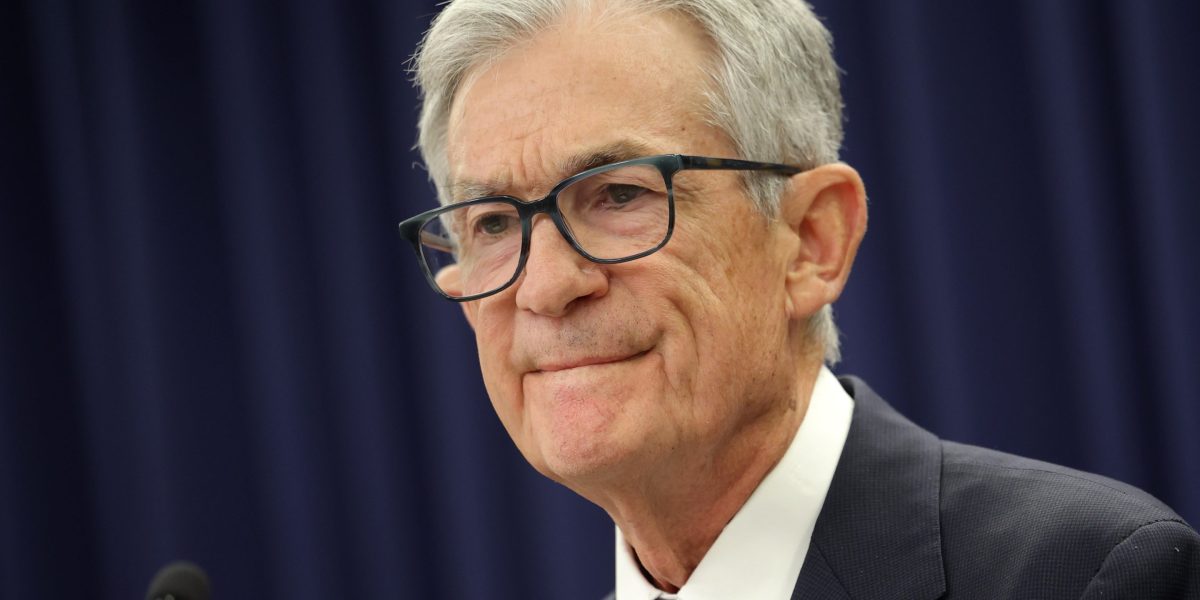
Powell Grapples with Conflicting Data, Delaying Fed Rate Cuts
Fed Rate Cuts in Question: Inflation and Jobs Data Signal Pause Under Powell
The Federal Reserve’s decision-making process has grown more complex following last week’s unexpectedly strong employment figures, which challenge the prevailing economic slowdown storyline that many analysts had embraced.
Conversely, this development could simplify Federal Reserve Chair Jerome Powell’s departure from his leadership role, as it provides a strong rationale for the Federal Open Market Committee (FOMC) to maintain current policies without rushing into changes.
Before the release of Wednesday’s data, market participants were split on the prospects of a 25 basis point reduction at the upcoming March FOMC meeting, with probabilities hovering around 40% according to the CME FedWatch tool. However, the Bureau of Labor Statistics report revealed a solid increase of 130,000 nonfarm payroll jobs in January, dramatically shifting expectations to over a 92% chance that rates will remain unchanged at the next gathering.
This dynamic stems from the Federal Reserve’s dual mandate of achieving 2% inflation while sustaining maximum employment levels. Rate reductions typically occur when employment growth decelerates, prompting stimulative measures to bolster economic activity. Yet, when the labor market demonstrates resilience, policymakers often see little urgency to adjust the benchmark rate downward.
Jerome Powell finds himself navigating a profound “puzzlement” in the economic landscape, as described by Bob Schwartz, senior economist at Oxford Economics. In a note to clients sent on Friday, Schwartz drew a parallel to the fictional King of Siam, who wrestled with the tension between known facts and uncertainties, a dilemma now shared by economists and Federal Reserve officials alike.
Schwartz highlighted how the latest employment figures upended the long-held narrative of subdued hiring and minimal layoffs that had dominated discussions among Fed observers. Compounding this shift, consumer spending data has introduced even greater ambiguity into future projections.
During 2025, economic analysis consistently pointed to affluent consumers as the primary engine of spending, without whose contributions the economy risked stagnation or even contraction into recessionary territory. For December, expectations were high, anticipating robust holiday expenditures from Christmas shopping and post-holiday sales to drive retail activity.
These assumptions proved incorrect. Last week’s report from the Commerce Department indicated virtually no growth in consumer spending for the festive period, a stark contrast to more vigorous performance in preceding months.
Schwartz observed that such mixed signals frequently result in policy paralysis, predicting no impulsive responses from the Federal Reserve to the recent barrage of reports. “Such confusion often leads to inertia,” he noted, advising against any hasty adjustments based on the week’s influx of information.
Adding to the data deluge, the Bureau of Labor Statistics’ Consumer Price Index (CPI) for January, unveiled on Friday, registered a gentle 0.2% rise on a seasonally adjusted basis, elevating the year-over-year all-items index to 2.4%.
This tempered inflation reading, Schwartz argued, lays the groundwork for the Fed to implement two additional rate cuts in the latter half of the year, even as it adopts a wait-and-see posture in the near term to reconcile the disparate economic indicators from the year-end period.
Mid-Year Easing on the Horizon
Although Powell’s tenure might conclude without further rate adjustments, the subsiding inflationary pressures strengthen the case for a more accommodative stance under the incoming Fed chair nominee, Kevin Warsh.
In a recent analysis, UBS forecasted that monetary easing would commence around mid-year. Mark Haefele, chief investment officer for UBS Global Wealth Management, explained that while the employment data diminishes the likelihood of imminent cuts, anticipated declines in inflation and a moderation in growth will progressively influence the Fed’s deliberations in the months ahead.
Haefele elaborated: “This jobs report lowers the odds of a near-term rate cut, but we think easing inflation and moderating growth in the coming months will gradually take priority in the Fed’s decision process.” He further referenced Kevin Warsh’s recent statements favoring looser policy, citing the chair nominee’s view that prevailing productivity gains exert downward pressure on prices.
Despite ongoing uncertainties regarding personnel transitions at the Fed, Haefele pointed out that the seven fixed voting members of the FOMC—both sitting and anticipated—lean slightly more dovish than the consensus projections. Consequently, UBS maintains confidence in additional easing, projecting two 25 basis point reductions between June and September.
This monetary policy outlook, in their assessment, creates a supportive environment for investments in equities, fixed income securities, and precious metals like gold.
The confluence of robust job additions and subdued price increases exemplifies the broader challenge confronting Powell and his colleagues: discerning a coherent economic trajectory amid contradictory signals. Labor market strength suggests no immediate recessionary threats, potentially obviating the need for aggressive intervention. Meanwhile, inflation’s proximity to the 2% target provides reassurance that price stability remains within reach, albeit requiring vigilant monitoring.
Economists like Schwartz emphasize that this “puzzlement”—a term evoking bewilderment in the face of incongruent data—historically fosters caution among central bankers. Rather than overreacting to isolated reports, the FOMC is inclined to accumulate additional evidence before pivoting policy direction.
Consumer behavior further complicates the picture. The unexpected stagnation in December spending underscores vulnerabilities tied to reliance on high-income households. Should this trend persist, it could signal softening demand, prompting reevaluation of growth prospects. Yet, the absence of widespread weakness tempers concerns, aligning with the Fed’s preference for patience.
Looking forward, market pricing reflects this tempered outlook, with near-term rate stability now the baseline expectation. Investors and analysts alike anticipate that Powell’s final meetings will prioritize data digestion over dramatic shifts, setting the stage for Warsh’s arrival amid a stabilizing economy.
UBS’s projection of mid-year cuts hinges on continued disinflation and controlled expansion, bolstered by productivity enhancements that Warsh champions. This scenario not only sustains asset rallies but also underscores the Fed’s adaptive approach to an economy defying simple categorization.
In essence, the current data mosaic reinforces a strategy of deliberate inaction, allowing policymakers to navigate uncertainties without premature commitments. As Powell steers through this intricate environment, the path to future easing appears methodical, contingent on evolving indicators that balance employment vigor with inflationary restraint.