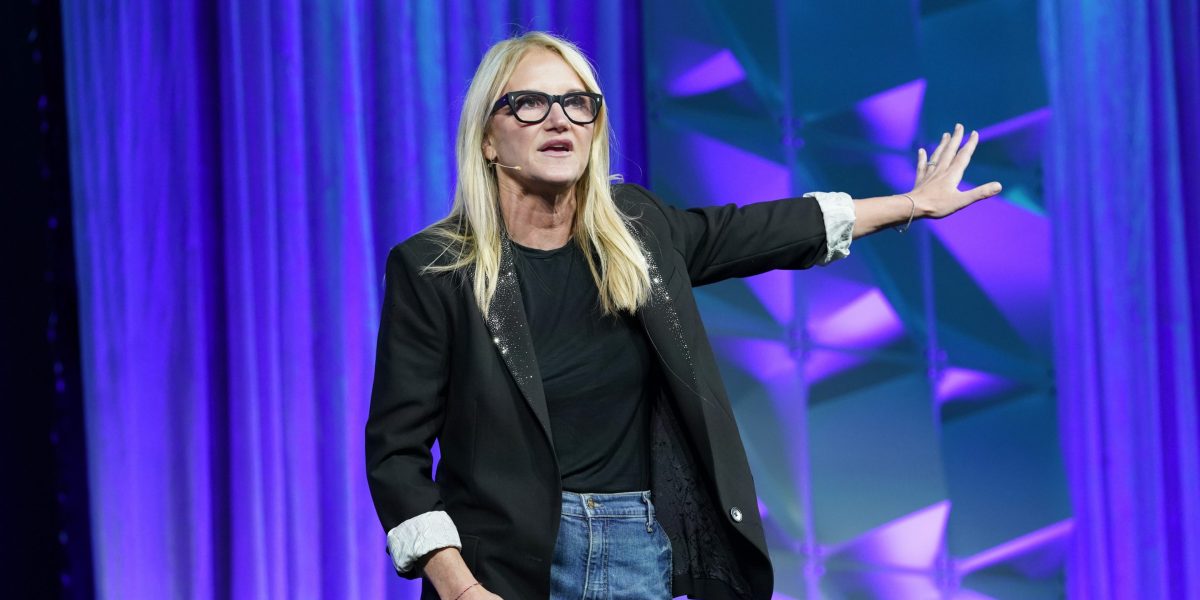
Mel Robbins: Feeling Stuck Isn’t Broken—Top Mindset Trap for Over 40s

Feeling Stuck Signals a Need for Growth, Not a Flaw
A significant number of people across the United States are experiencing a sense of stagnation in their professional lives. Younger workers from Generation Z are often settling for any available position they can secure, even if it means accepting lower pay, while those in the middle stages of their careers are adopting a low-profile approach amid a highly competitive and unforgiving job market. However, Mel Robbins, a millionaire podcast host and bestselling author, argues that this pervasive sensation of being trapped is frequently nothing more than a misconception that can be overcome.
In a recent appearance on CBS News Sunday Morning, Robbins shared her perspective: “If you feel stuck in your life, it doesn’t mean you’re broken. It means that what’s missing in your life is growth.” She elaborated on her own experiences, recounting how she once resisted suggestions like enrolling in a class because it felt like an admission of personal failure. Instead, she realized that the core issue was stagnation. “What’s missing is you are stagnant,” she explained. “And if I can get you to grow and learn in any area of your life, you start to change, things start to loosen up and you start to see different things.”
Observing Overlooked Details Fuels Career Success
The host of The Mel Robbins Podcast and former legal analyst for CNN has built an impressive two-decade career in motivational speaking, authoring bestselling books, and hosting a popular self-improvement podcast. This success followed her earlier days working in the legal field. Robbins attributes her achievements to a habit of keen observation, emphasizing that truly exceptional individuals are those who notice “all the details that most people ignore” and dismiss as insignificant.
Spotting emerging trends early, particularly those that initially seem obscure, can dramatically influence professional trajectories—especially in today’s landscape dominated by artificial intelligence and rapid technological evolution. Robbins takes particular pride in her approach as a businesswoman, noting a common pitfall she observes among her peers in their late 40s and 50s. “I see too many of my friends… making a mistake, which is when technology starts to change, people tend to lean back because they’re afraid,” she observed. In contrast, her strategy has always been to “lean in.”
As leading companies increasingly embed AI across all facets of their operations, proficiency in technology has shifted from an advantageous skill to an essential requirement for job candidates. Robbins urges everyone, but particularly those from older generations like Generation X, to familiarize themselves with emerging technologies. Failing to do so could lead to serious professional repercussions in this fast-changing environment.
She stressed the importance of understanding technological tools and their subtleties: “I understand the tech and the nuances, because if you don’t, people who do will run you over.” By staying ahead of the curve, individuals can position themselves advantageously rather than being left behind.
Gen Z Faces Unique Pressures—Robbins Offers Reassurance
Robbins also extends her empathy to Generation Z workers, who are grappling with profound anxieties about their career prospects. Entry-level positions are becoming scarcer, many junior roles are being replaced by AI automation, and salary increases are often disappointingly minimal. She acknowledges the relentless criticism young workers face, being labeled as fragile, overly reliant on social media, and prone to anxiety. Yet, Robbins points out that they confront obstacles that previous generations did not have to endure during their early career stages.
The pressures on today’s average 20-year-old are immense, involving unprecedented levels of stress, societal expectations, and global uncertainty. “The average 20-year-old today is under so much stress and pressure and chaos right now,” Robbins noted, “and it’s not stress and pressure and chaos that existed five or six years ago.”
She highlights how older generations cannot fully comprehend the challenges of entering adulthood in 2025. Achieving homeownership feels unattainable for many, the wealth disparity between generations is widening dramatically, and the burden of massive student loan debts weighs heavily on their shoulders. “They’re now in the middle of a recession, in hybrid work. The world is shifting, the landscape is shifting,” Robbins described. “If you feel lost, I’m not surprised. This is exactly how you should feel.”
Data underscores the gloom among Gen Z in the workplace. A 2025 MetLife survey revealed that only 62% of these young professionals report job satisfaction, marking the lowest rate across all generations. Their dissatisfaction extends beyond the office; economic instability permeates their personal lives as well. Just 43% of entry-level workers express optimism about their employer’s business outlook over the next six months, according to a 2025 Glassdoor analysis—the lowest since tracking began in 2016.
Robbins reassures them: “You’re doing your twenties correctly—there’s nothing wrong with you.” This validation aims to counteract the self-doubt amplified by external judgments and structural barriers.
Embracing Lifelong Learning to Break Free from Stagnation
Robbins’ philosophy centers on proactive personal development as the antidote to feeling stuck. Rather than viewing stagnation as a permanent state or personal defect, she frames it as an opportunity for intentional growth. This mindset shift is particularly vital for mid-career professionals over 40, who may feel intimidated by technological advancements but hold the experience to adapt effectively if they choose to engage.
Her career trajectory exemplifies this approach. Transitioning from law to media and self-help domains required constant learning and adaptability. By paying attention to subtle shifts—like the rise of AI—she has remained relevant and successful. Robbins warns that resistance to change, especially tech-related, is a critical error that can sideline even seasoned professionals.
For Gen Z, her message is one of normalization amid chaos. The turbulent job market, economic headwinds, and evolving work norms create a perfect storm, but recognizing this reality is the first step toward resilience. Robbins encourages both generations to pursue growth in any domain—be it skills, mindset, or networks—to unlock new possibilities.
Ultimately, Robbins’ insights reveal that feeling stuck is a universal signal calling for expansion, not a verdict of brokenness. By leaning into discomfort, observing keenly, and committing to continuous learning, individuals of all ages can transform stagnation into momentum and thrive in an unpredictable world.