Mark Carney’s Bold Challenge to Trump on Canada’s Future
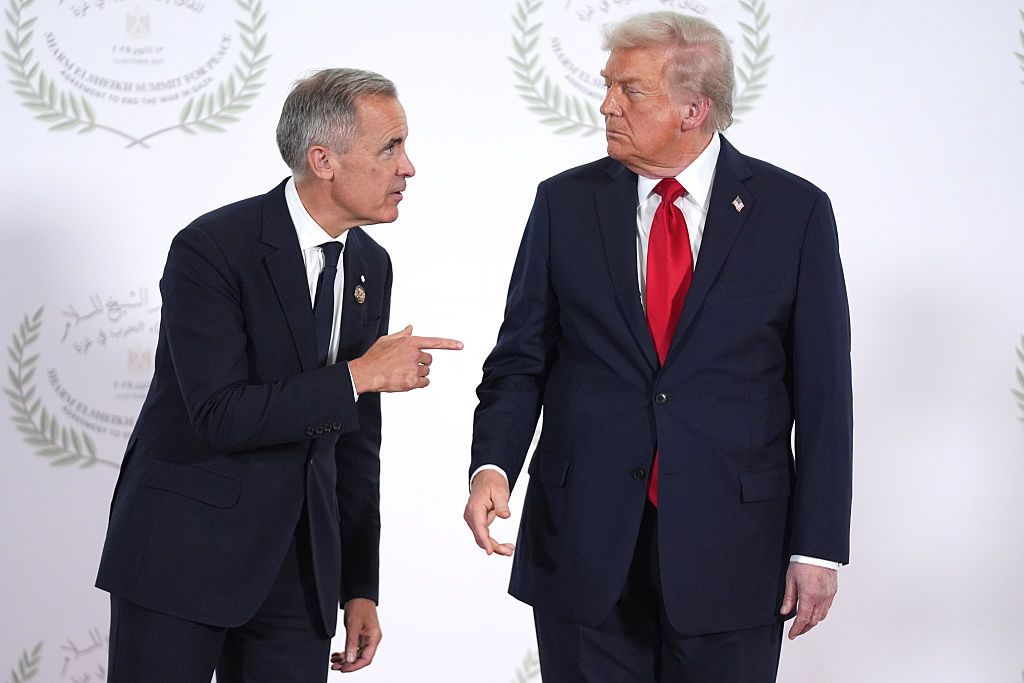
Canada faces significant apprehension regarding Donald Trump’s policies. The onset of Trump’s second presidency about a year ago, marked by bold declarations aiming to annex Canada as the 51st U.S. state, profoundly reshaped the nation’s political environment. Support for the Conservative party, headed by Pierre Poilievre who shares ideological affinities with Trump, experienced a sharp decline in public opinion polls. Conversely, the Liberal party, now guided by their fresh leader Mark Carney, capitalized on a campaign emphasizing pragmatic nationalism and sharp economic insight, propelling them to a surprising triumph in the April election. Mere hours after securing his position as Prime Minister, Carney issued a stark admonition to his followers about the evolving peril posed by Canada’s dominant neighbor and historical partner. He asserted, “America desires our territory, our natural assets, our freshwater supplies, our sovereignty.” He further emphasized, “President Trump seeks to fracture our unity so that America can claim ownership over us. Such an outcome will never come to pass under my watch.”
Examining the Dynamics of U.S.-Canada Relations
The bilateral ties between the United States and Canada have fluctuated considerably, featuring occasional hints of reluctant admiration for Carney from within the White House, alongside concessions from the Canadian Prime Minister that temper his bolder public statements. While tariffs have been enacted and later partially retracted, the most severe economic fallout has been averted thus far. Nevertheless, enduring strategic repercussions have emerged, with Canada under Carney emerging as the most vocal NATO ally in resisting Trump’s rhetoric on regional supremacy and encroachments on neighboring nations’ independence. For Canada, much like the situation with Greenland, this danger feels tangible rather than hypothetical. Just last month, U.S. Treasury Secretary Scott Bessent openly supported separatist sentiments in Alberta, Canada’s resource-laden western province, suggesting it should simply “join us down south”—a provocative statement from an ostensible partner. During the recent Davos gathering, Carney garnered an uncommon standing ovation from global leaders in politics and business after cautioning about an impending “fracture” in international stability, committing Canada to confront “the world in its current form, rather than lingering for an idealized version.”
Understanding the Deep Economic Interdependence
Exports constitute approximately one-third of Canada’s gross domestic product, with over 75% directed southward to the United States. In comparison, exports represent only about 10% of the U.S. GDP, and just 16% of those flow northward to Canada. This disparity underscores a profoundly lopsided and reliant partnership. Canadian shipments to the U.S. equate to roughly 25% of its total economic activity, whereas U.S. exports to Canada comprise a mere 1.6% of America’s GDP. Furthermore, pivotal industries such as automotive manufacturing and energy production are deeply integrated across borders in ways that are practically inseparable, according to insights from Emily Stewart in Business Insider. Consequently, Carney navigates a precarious balance: staunchly defending Canadian priorities without provoking Trump to the point of escalation. A more self-assured economic posture for Canada has long been overdue. From George W. Bush’s post-9/11 ultimatum of alignment or opposition, to Barack Obama’s “Buy American” initiatives, and Joe Biden’s protectionist industrial strategies, the U.S. has progressively behaved like a distant ally, notes Stewart. Trump’s era marks an intensified pivot, exemplified by his recent ultimatum of 100% tariffs on Canadian products should Ottawa pursue a trade pact with China despite U.S. objections.
Assessing the Impact of Trump’s Tariff Strategies
Under the 2020 United States-Mexico-Canada Agreement (USMCA), nearly 85% of trade between Canada and the U.S. remains tariff-free. Despite this safeguard, Trump’s protectionist measures have inflicted considerable harm on key Canadian sectors, notably automobiles, steel and aluminum production, and softwood lumber industries—all enduring substantial employment reductions due to these levies. With USMCA negotiations slated for later this year, uncertainty looms large for Canada’s economic stability. In response, the Carney administration is accelerating efforts to diminish reliance on the U.S. market and cultivate partnerships elsewhere. Currently, three-quarters of Canadian exports target the U.S.; the objective is to halve this proportion through strategic diversification.
Canada’s Strategic Initiatives for Economic Resilience
To fortify its position, Carney has unveiled an ambitious “nation-building” program centered on infrastructure enhancements, such as high-speed rail networks and expanded port facilities designed to channel plentiful natural resources toward emerging international buyers. Complementing this, the government is advancing the deployment of additional small modular nuclear reactors, expanded wind energy capacity, a doubling of liquefied natural gas output, and accelerated mining of essential minerals. Ottawa is adopting a proactive industrial policy, paired with bureaucratic reforms to minimize obstacles and steer economic growth more effectively, as highlighted by Ilya Gridneff in the Financial Times. Importantly, Trump lacks complete leverage. Canada supplies the majority of U.S. oil imports via intricate pipeline systems to American refineries, replacements for which would demand astronomical investments. The USMCA’s mutual benefits render it too integral to collapse. Moreover, the automotive sector—Canada’s second-largest export category, encompassing vehicles, components, and metals—has been forged into a seamless transnational supply chain over decades since the 1960s, complicating any abrupt severance.
Market Confidence Amid Geopolitical Tensions
Financial markets display notable composure regarding these developments. Canada’s fiscal health remains solid, with the Royal Bank of Canada projecting a budget deficit of 3.3% of GDP for the current year—modest relative to the U.S.’s approaching 6%. The Canadian dollar has appreciated against its U.S. counterpart throughout Trump’s second term, while the TSX Composite index has achieved unprecedented peaks, surging 30% in the last year—nearly double the S&P 500’s gains. A primary driver, according to FT’s Lex column, lies in Canada’s equity market composition: roughly half comprises natural resources, attuned to worldwide price movements and indispensable to U.S. demands, plus financial services insulated from tariff pressures. These sectors represent only about 15% of the U.S. market. “Canada stands as my top overweight position among developed markets,” declares Marko Papic, chief strategist at BCA Research. “Carney possesses a precise understanding of his strategy.”