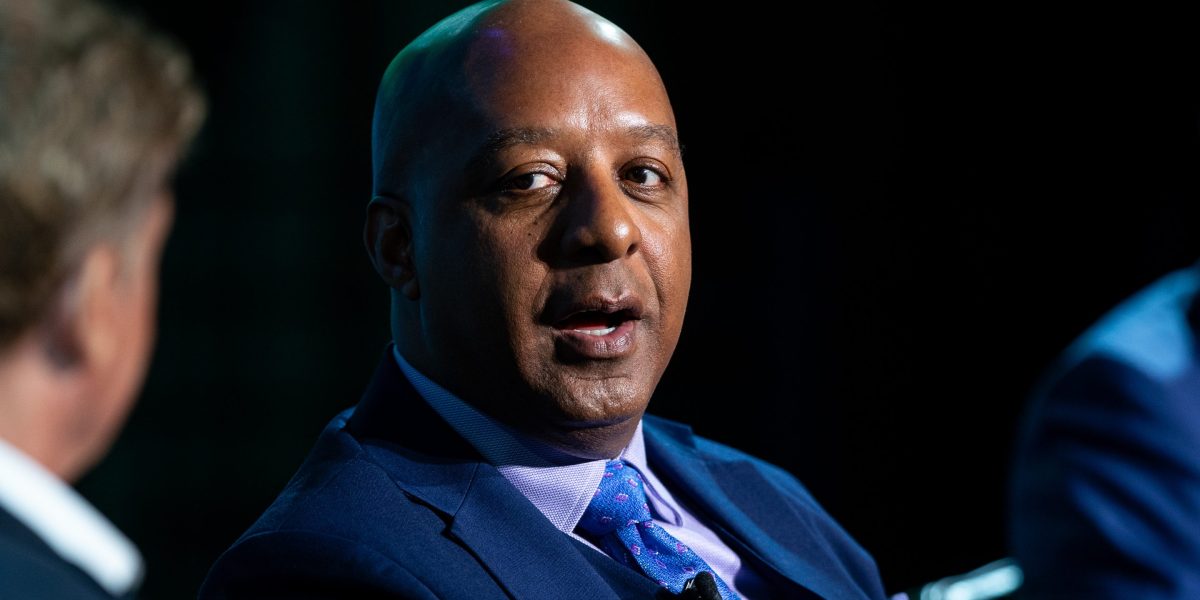
Lowe’s CEO Rose from $4.35/Hour Target Job by Taking Unwanted Tasks
While numerous professionals begin their careers in retail environments, very few ascend to the pinnacle of leadership within a Fortune 500 corporation. Marvin Ellison stands out as a remarkable exception to this trend.
Ellison launched his professional journey earning a modest $4.35 per hour as a part-time associate at Target during his time as a student at the University of Memphis. Today, he holds the prestigious positions of president, CEO, and chairman at Lowe’s, a colossal home-improvement enterprise valued at $161 billion and recognized as one of just 10 Black-led CEOs among the Fortune 500 roster, representing a mere 2% of that elite assembly.
Contemplating his unique status among Black CEOs in the Fortune 500, Ellison expresses a blend of gratitude and frustration. “I feel profoundly honored and fortunate to occupy this position, as it affords me the opportunity to serve as an inspiring figure and forge opportunities for others who share my background,” he shared during a November 2022 conversation with Daymond John, the renowned Black entrepreneur behind the hip-hop apparel brand FUBU and a prominent investor on Shark Tank.
“At the same time, I’m deeply troubled by the persistent disparity between the abundant talent available among individuals like me and the limited access to such high-level roles,” Ellison continued. He oversees a Fortune 50 powerhouse boasting over 1,700 locations and employing more than 300,000 team members across the United States, as detailed in Lowe’s official leadership profiles.
Marvin Ellison’s Proven Strategy for Overcoming Obstacles and Achieving Success
Ellison entered the workforce as a part-time retail worker, yet he found himself in an organization committed to nurturing employee growth. He dedicated 15 years to relentless effort, climbing steadily until he secured a director-level role at Target, after which he transitioned into the competitive home-improvement sector.
The key to Ellison’s elevation to executive positions in both retail giants and home-improvement leaders was his proactive approach to standing out among peers. He consistently volunteered for challenging assignments and responsibilities that others avoided, a tactic he credits for his rapid advancement.
“I lacked an elite educational background or Ivy League credentials. My resume didn’t feature impressive global experiences or high-profile assignments,” Ellison reflected. “Faced with competitors boasting impeccable qualifications, I needed a distinctive method to set myself apart and demonstrate my value.”
This deliberate strategy propelled him through the hierarchy at Target and subsequently to Home Depot, where he invested 12 years in high-level operational capacities. From 2008 to 2014, he served as executive vice president of U.S. stores, implementing transformative enhancements in customer satisfaction and operational streamlining throughout the enterprise, according to Lowe’s documentation. Lowe’s recruited Ellison following his tenure as chairman and CEO at J.C. Penney. Additionally, he obtained his MBA from Emory University and contributes his expertise to the board of directors at FedEx.
Lowe’s holds the 52nd position on the Fortune 500 ranking and consistently earns spots on Fortune’s esteemed compilations of America’s Most Innovative Companies and the World’s Most Admired Companies. It comes as no surprise, therefore, that the company is collaborating closely with Nvidia to pioneer artificial intelligence solutions tailored for its retail operations. Presently, Lowe’s deploys over 50 active AI models to optimize sourcing strategies, inventory forecasting, dynamic pricing mechanisms, and overall enhancements that simplify selling, shopping, and working within its ecosystem.
“We’re strategically positioning ourselves to excel when market conditions improve, an upturn we anticipate with certainty,” Ellison stated in a May 2024 discussion on CNBC. “Once that momentum builds, we plan to capture substantial market share through the strategic initiatives and investments we’ve embedded in our operations.”
Ellison’s Hands-On Approach to Fostering Diversity and Empowering Black Executives
Ellison’s commitment to diversity, equity, and inclusion sets him apart from many peers. In the wake of George Floyd’s tragic death in 2020, while some leaders resorted to superficial financial pledges or token appointments, Ellison adopted a practical, action-oriented methodology.
“Focus on execution over rhetoric,” he emphasized. “My goal was straightforward resolution without fanfare. There were no grand press releases, no media blitz, no lengthy reports. I simply declared it a core priority and got to work implementing change.”
Under his guidance, Lowe’s established a robust supplier diversity initiative designed to bolster underrepresented enterprises, enabling their expansion and job creation. The company actively participates in multiple regional supplier diversity councils. Internally, Lowe’s emphasizes recruiting from diverse pools and investing in skill-building programs.
“These individuals might not fit traditional profiles based on conventional credentials,” Ellison noted. “However, we’ve pinpointed essential leadership competencies and developed training around them. This approach builds a robust talent pipeline company-wide, prioritizing demonstrated outcomes, innate leadership qualities, and daily performance over pedigree. It represents a fundamental shift in our talent development paradigm.”
Ellison’s journey from a low-wage retail position to the helm of a multibillion-dollar corporation exemplifies the power of perseverance, strategic risk-taking, and a willingness to embrace uncomfortable challenges. His story resonates particularly strongly within underrepresented communities, offering a blueprint for breaking through entrenched barriers in corporate America. By volunteering for the least desirable tasks early in his career, Ellison not only honed critical skills but also gained invaluable visibility and trust from superiors who recognized his dedication.
This philosophy continues to influence his leadership at Lowe’s, where he champions innovation and inclusivity. The company’s AI integrations, for instance, are not merely technological upgrades but strategic tools aimed at future-proofing the business against economic fluctuations. Ellison’s foresight in partnering with tech leaders like Nvidia positions Lowe’s to thrive amid evolving consumer demands and competitive pressures in the home-improvement market.
Moreover, his emphasis on practical diversity measures underscores a belief in meritocracy redefined—not by elite networks or prestigious degrees, but by tangible results and character. As one of the few Black CEOs steering a Fortune 500 ship, Ellison’s mixed emotions about representation reflect broader systemic issues, yet his actions provide a counter-narrative of possibility. He’s not just occupying space at the top; he’s actively constructing ladders for those following behind, ensuring that the path he forged becomes more accessible for future generations of diverse talent.
In reflecting on his Target days, Ellison often highlights how that initial $4.35-an-hour role was more than entry-level drudgery—it was a proving ground. The retail floor taught him customer empathy, operational grit, and the nuances of team dynamics, lessons that propelled him through subsequent roles. His progression to Home Depot and J.C. Penney further refined these skills, culminating in his transformative leadership at Lowe’s.
Looking ahead, Ellison remains optimistic about Lowe’s trajectory. With AI-driven efficiencies enhancing everything from supply chain logistics to in-store experiences, the company is primed for growth. His mantra of tackling unwanted jobs translates to corporate strategy: embracing innovation when others hesitate, investing in people over processes alone, and prioritizing long-term resilience over short-term gains.