
ING: ‘Sell America’ Trade Causes Lasting Harm to US Dollar
The United States economy expanded at an annualized pace of 4.4% during the most recent year for which gross domestic product data is available, while inflation continues to ease. Meanwhile, the stock market has climbed almost 12% across the past 12 months. These indicators, on the surface, point to robust investor faith in the strength of the U.S. dollar.
However, reality paints a starkly different picture.
The U.S. dollar persists in a downward trajectory. Over the last 12 months, it has depreciated by 9.4%, and it concluded the prior year with a decline of nearly 10% when evaluated against a broad index of major foreign currencies. Naturally, there are fluctuations along the way. Nevertheless, the dollar has exhibited a consistent weakening pattern since 2022.
Against the British pound, the dollar has shed 8% of its value in the past year—a startling development given that the U.K.’s yearly economic growth stands at a sluggish 1.3%, far trailing its U.S. counterpart.
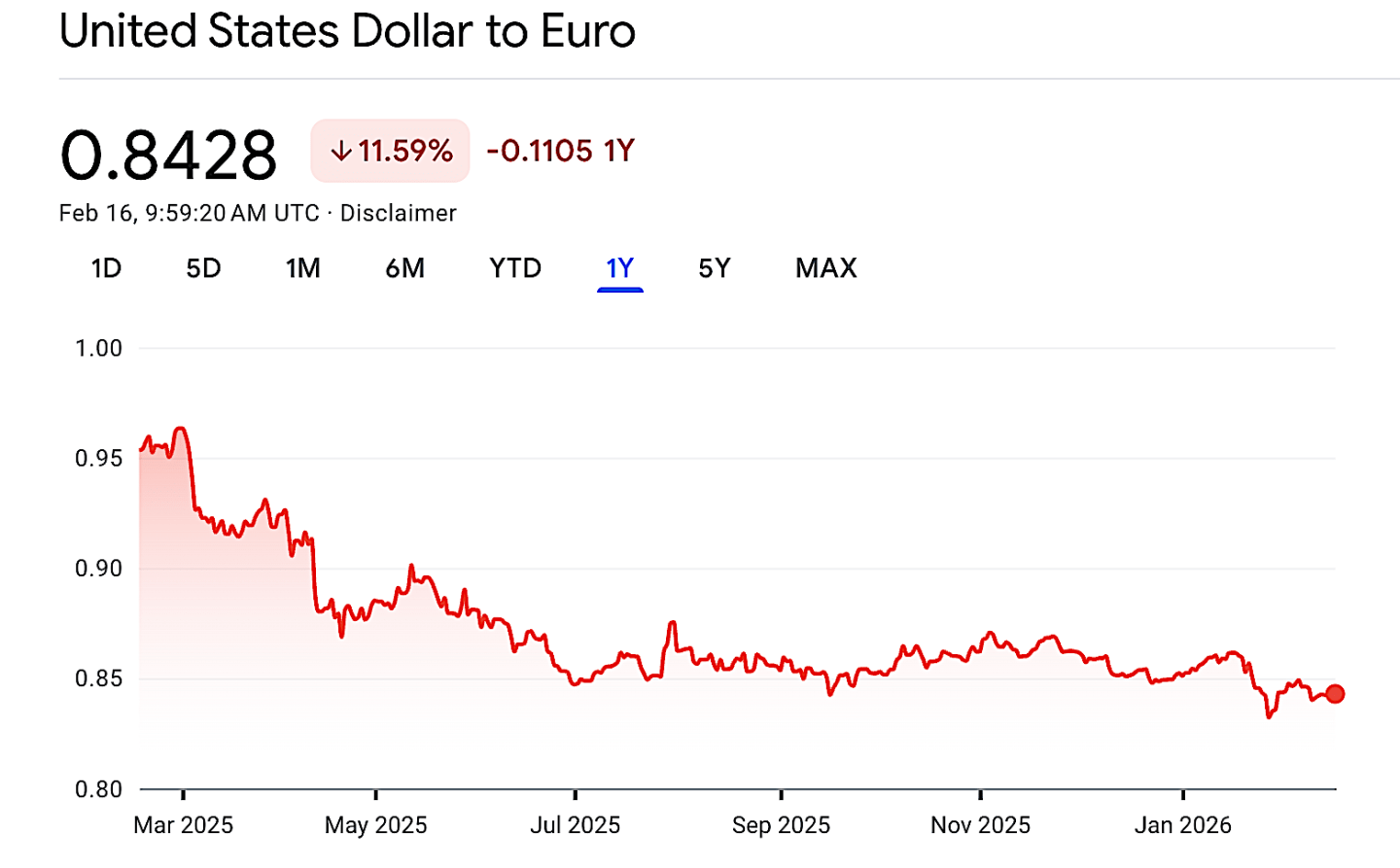
Despite the White House maintaining that Europe confronts existential threats, currency market participants hold contrasting opinions. The dollar has dropped approximately 12% versus the euro over the last 12 months, meaning one dollar now purchases just 84 cents worth of euros in Paris.
Stock market investors echo this sentiment. The Stoxx Europe 600 index has advanced by nearly 4% so far this year, whereas the S&P 500 has edged down by 0.14%.
So, what explains this paradox? Analysts at ING, including Francesco Pesole, attribute it to the ongoing ‘Sell America’ trade. Even though the U.S. economy demonstrates underlying strength on paper, multiple adverse factors are exerting persistent pressure on the dollar’s value.
Among the primary concerns is the uptick in unemployment coupled with subdued hiring activity, as highlighted in detailed charts prepared by Lawrence Werther and Brendan Stuart from Daiwa Capital Markets.
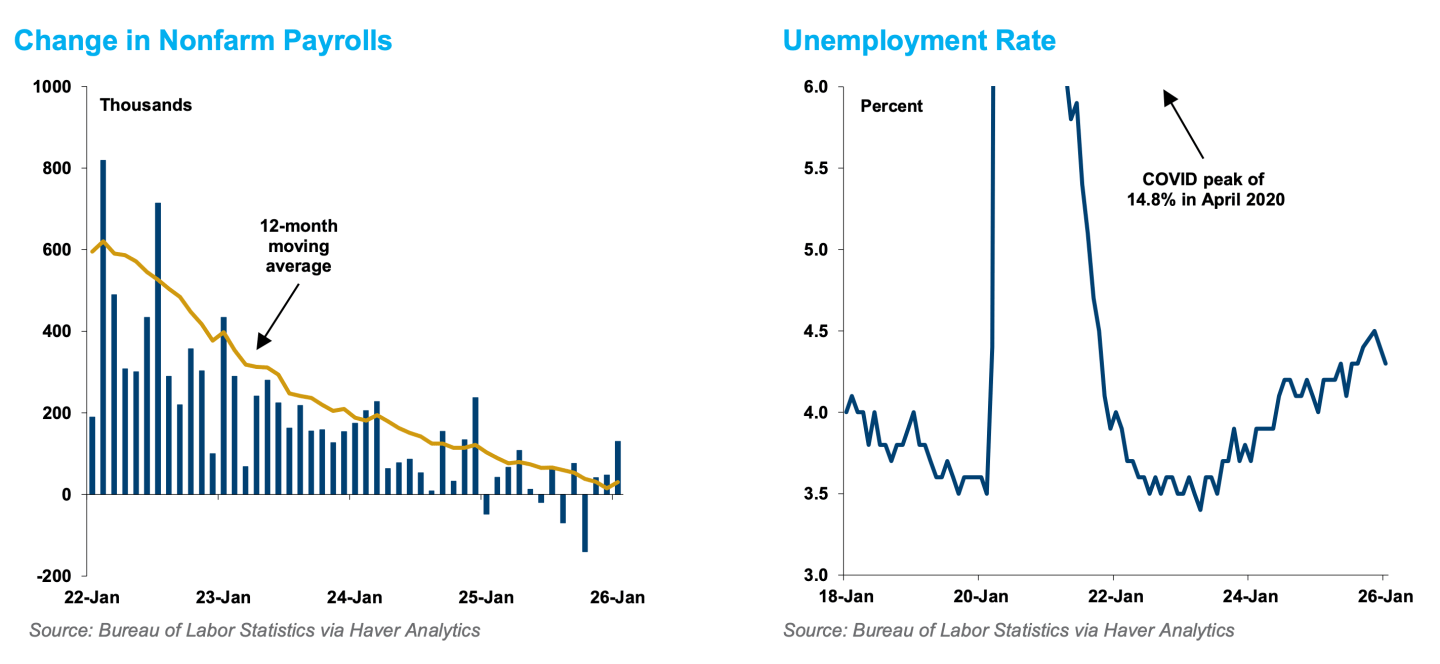
Economists anticipate that the January employment growth figure, which initially appeared surprisingly strong, will undergo downward revisions in the months ahead. This outlier may prove to be a mere data anomaly that more refined statistics will correct over time.
A core responsibility of the U.S. Federal Reserve involves bolstering the labor market. Subpar employment data could encourage the central bank to introduce additional monetary easing measures to stimulate economic activity. The Fed maintained its benchmark interest rate at 3.5% during its January policy meeting, but the consensus among Wall Street forecasters points to at least two rate reductions later this year.
Faced with expectations of diminished yields on dollar-denominated assets moving forward, investors are steering clear of U.S. currency exposure.
Francesco Pesole recently informed ING clients that recent developments underscore how enhancements in the broader U.S. economic landscape fall short of restoring the dollar to its early January peaks. He emphasized that the mid-January ‘Sell America’ surge continues to inflict enduring harm on the greenback, reminiscent of patterns observed during the summer of the previous year. The market’s response following last week’s payrolls report further validates that investor confidence remains elusive.
Pesole added that the dollar has forfeited a substantial portion of its traditional safe-haven appeal.
George Vessey from Convera shares this perspective, observing that the U.S. dollar index closed lower last week amid volatile trading influenced by concerns over AI-related equity market turbulence and ambiguous macroeconomic cues regarding Federal Reserve intentions. Market participants appear predisposed to interpret softer or more dovish U.S. economic releases negatively, with growing conviction that the Fed will react more aggressively to any labor market vulnerabilities.
Current market overview this morning:
- U.S. markets are shuttered today due to a federal holiday. The S&P 500 ended its previous session essentially unchanged at 6,836.17.
- The STOXX Europe 600 advanced 0.33% in early session trading.
- Britain’s FTSE 100 rose 0.22% at the open.
- Japan’s Nikkei 225 slipped 0.24%.
- China’s CSI 300 remains closed for Chinese New Year celebrations.
- South Korea’s KOSPI is also closed for the holiday.
- India’s NIFTY 50 gained 0.83%.
- Bitcoin climbed to $68.9K.