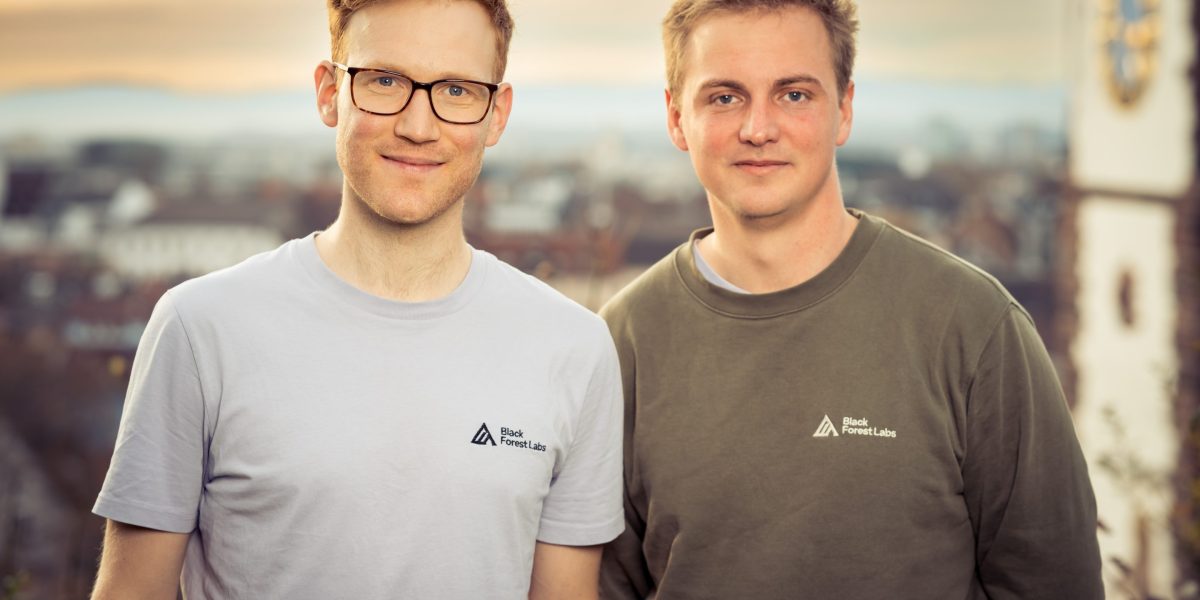
Germany’s Black Forest Labs: Europe’s Top AI Unicorn
Black Forest Labs, the innovative visual artificial intelligence company responsible for developing the advanced Flux image generation models, has emerged stealthily as one of the highest-valued AI enterprises across the European continent.
This remarkable achievement stands out significantly for a company that is merely 18 months into its existence. The accomplishment becomes even more impressive when considering the broader landscape of artificial intelligence investments, where approximately 80% of the substantial $270 billion poured into AI ventures last year flowed into North American projects, with a full 60% concentrating specifically in companies headquartered in the Bay Area. In stark contrast, Europe managed to secure only 13.6% of those funds. This disparity underscores that the epicenter of AI capital investment remains firmly rooted in the United States, even as one of the pivotal players in visual AI technology is being meticulously constructed right in the heart of Germany.
Headquartered in the picturesque city of Freiburg, Black Forest Labs successfully closed a massive $300 million Series B funding round late last year, achieving an impressive valuation of $3.25 billion. This transaction ranks among the largest AI funding deals ever recorded in Europe. The investment was jointly led by prominent firms AMP and Salesforce Ventures, bolstered by strategic investments from industry leaders such as Canva and Figma, alongside participation from a prestigious array of AI-focused investors including a16z and Nvidia. To provide some perspective on the scale, the total funding raised by European startups specializing in generative AI from 2019 through 2024 amounted to roughly $6.1 billion, representing merely a fraction when compared to the worldwide totals for generative AI investments.
Today, the sophisticated models developed by Black Forest Labs are integral to powering image creation and modification functionalities that operate seamlessly in the background for an expanding roster of major technology platforms and productivity applications. Notable adopters include tech giants like Meta as well as design powerhouses such as Canva. One of the company’s cofounders, Robin Rombach, highlights Flux Kontext, their cutting-edge image editing model, as a prime example of what they envision as true ‘visual intelligence.’ He explains that this breakthrough represented the pioneering model capable of performing image edits while preserving character consistency throughout the process.
‘For instance, you could upload a photo of yourself, make various modifications to that image, and the result would still unmistakably resemble you, maintaining your unique likeness intact,’ Rombach elaborates. This level of fidelity in editing sets a new standard in the field.
What sets Black Forest Labs apart further is their distinctive approach to monetization, which challenges the conventional model of tightly controlled APIs prevalent in the industry. Their strategy revolves around open-source and open-weights model releases, which serve not as altruistic gestures but as highly effective mechanisms for broadening their customer acquisition funnel.
Cofounder Andreas Blattmann reflects on the early stages of the company, noting how community-driven fine-tuning of their models quickly addressed real-world challenges, such as integrating products into entirely new visual scenes for marketing purposes. The open-weights versions of their models are made publicly accessible for download, though they operate under a non-commercial license that restricts certain uses.
The strategic pivot comes into play when larger enterprises seek to deploy these models at scale in production environments. At that juncture, they must procure a commercial license directly from Black Forest Labs to proceed legally and reliably. Complementing this, the company provides a high-performance, low-latency API option for a wide range of other applications. According to Rombach, their revenue streams are balanced approximately evenly, split roughly 50/50 between usage-based products and traditional enterprise licensing agreements. While the company chose not to disclose precise revenue figures, this diversified model appears to be fueling their rapid ascent.
On the surface, Black Forest Labs fits squarely within the expansive global AI investment bubble that has dominated headlines. However, engaging in conversations with the founders reveals a mindset more akin to steady, deliberate tortoises rather than the frenetic hares racing ahead in the sector. Rombach emphasizes that visual generative AI technology has now reached a pivotal maturation point where it functions reliably in practical settings, delivering tangible productivity enhancements. He points to the surging adoption within productivity tools constructed atop their foundational technology as evidence of this shift.
The company’s overarching ambition, as articulated by Rombach to Fortune, centers on establishing a robust, sustainable business foundation—one that minimizes overreliance on volatile capital markets, even in the event of an abrupt downturn in investment enthusiasm. This prudent philosophy permeates their operations.
Yet, beneath this measured exterior lies an audacious long-term wager: that mastery of image-related technologies merely scratches the surface of their potential. Looking ahead to 2028, Blattmann aspires for Black Forest Labs to evolve into the undisputed benchmark for visual intelligence systems, all while retaining the agile, cohesive spirit of a compact research lab.
Rombach elevates the vision even further, boldly asserting that Black Forest Labs has already exerted profound influence in sculpting the forthcoming landscape of visual AI. By 2028, he envisions their Flux suite of models as having fundamentally altered the course of visual AI development. This transformation would manifest through the enablement of fully autonomous ‘purely visual agents,’ more immersive and accurate simulation environments, and a revolutionary paradigm for machine perception of the visual world.
Strategic Funding and Global Impact
The $300 million Series B round not only catapulted Black Forest Labs to a $3.25 billion valuation but also positioned it as a beacon for European AI innovation amid a U.S.-dominated funding ecosystem. With backers like Salesforce Ventures, a16z, Nvidia, Canva, and Figma, the company benefits from both financial muscle and strategic partnerships that accelerate product integration across global platforms.
Flux Models: Redefining Visual AI
Central to Black Forest Labs’ success are the Flux family of models, which excel in high-fidelity image generation and editing. Flux Kontext, in particular, broke new ground by ensuring edits preserve subject identity—a critical feature for applications ranging from personalized content creation to professional design workflows.
- Seamless integration with major platforms like Meta and Canva.
- Community-driven fine-tuning for niche marketing and creative uses.
- Balanced revenue from APIs, licenses, and enterprise deals.
Open-Source Strategy: Funnel to Fortune
By releasing open-weights models under non-commercial terms, Black Forest Labs democratizes access while funneling serious adopters toward paid solutions. This approach has proven effective, with early community adaptations solving complex problems and drawing enterprise interest.
Future Vision: Beyond Images
The founders’ roadmap extends far beyond static images. They foresee Flux powering visual agents that interact with the world independently, enhancing simulations for industries like gaming, autonomous vehicles, and virtual reality. By 2028, Black Forest Labs aims to set the gold standard in visual intelligence, maintaining innovation velocity despite scaling challenges.
This blend of technical prowess, savvy business tactics, and ambitious foresight explains how a young German startup has quietly ascended to Europe’s AI elite, challenging the notion that AI dominance is an exclusively American phenomenon.