Exploring Modern Riyadh: Alcohol, Culture & Attractions
Alcohol sales are now available in Riyadh, though they come with specific requirements. Buyers must be non-Saudi nationals, provide proof of a monthly income exceeding 50,000 riyals (approximately £9,700), and maintain discretion regarding their purchases.
Despite these restrictions, the introduction of premium-priced bottles like Jacob’s Creek in one of the globe’s most famous alcohol-free cities marks a significant shift in societal norms.
The Riyadh of today differs greatly from longstanding perceptions. Women have gained the right to drive, are increasingly joining the workforce in large numbers, are covering their faces and hair less frequently, and mixed-gender handshakes have become widely accepted. These transformations are progressing at a pace that has surprised many observers. Returning to the topic of alcohol access.
The recent expansion of bottle shops to everyday expatriates—previously limited to diplomats—was somewhat anticipated. However, the speed and scale of this rollout have been astonishing. Just last November, eligibility required demonstrating a monthly income of 80,000 riyals. One wonders what further relaxations might follow.
Speculation abounds about alcohol service in actual bars. Rumors suggest that international hotels could soon be permitted to offer drinks within the coming year. Skeptics might consider a visit to the elegant Attaché, described as a multi-sensory playground (essentially a sophisticated global cuisine restaurant) in the Diplomatic Quarter. An adjacent nightclub called Unstable already features what closely resembles a cocktail bar, currently adorned with non-alcoholic options like Heineken 0% and Tanqueray 0%.
Some may view this emphasis as exaggerated, but a glance at UK advertising billboards reveals Saudi Arabia’s aggressive push to attract visitors. The kingdom has constructed numerous stunning hotels—and plans many more—operating on the principle that impressive infrastructure will draw crowds. Yet, tourism growth has not materialized as swiftly or naturally as hoped.
This reality may explain the strategic considerations for boosting visitor numbers. After all, countless travelers would prefer concluding a day of desert exploration with a chilled glass of rosé rather than the overly sweet sparkling apple juice dubbed “Saudi Champagne.” Catering to such preferences could entice far more tourists.
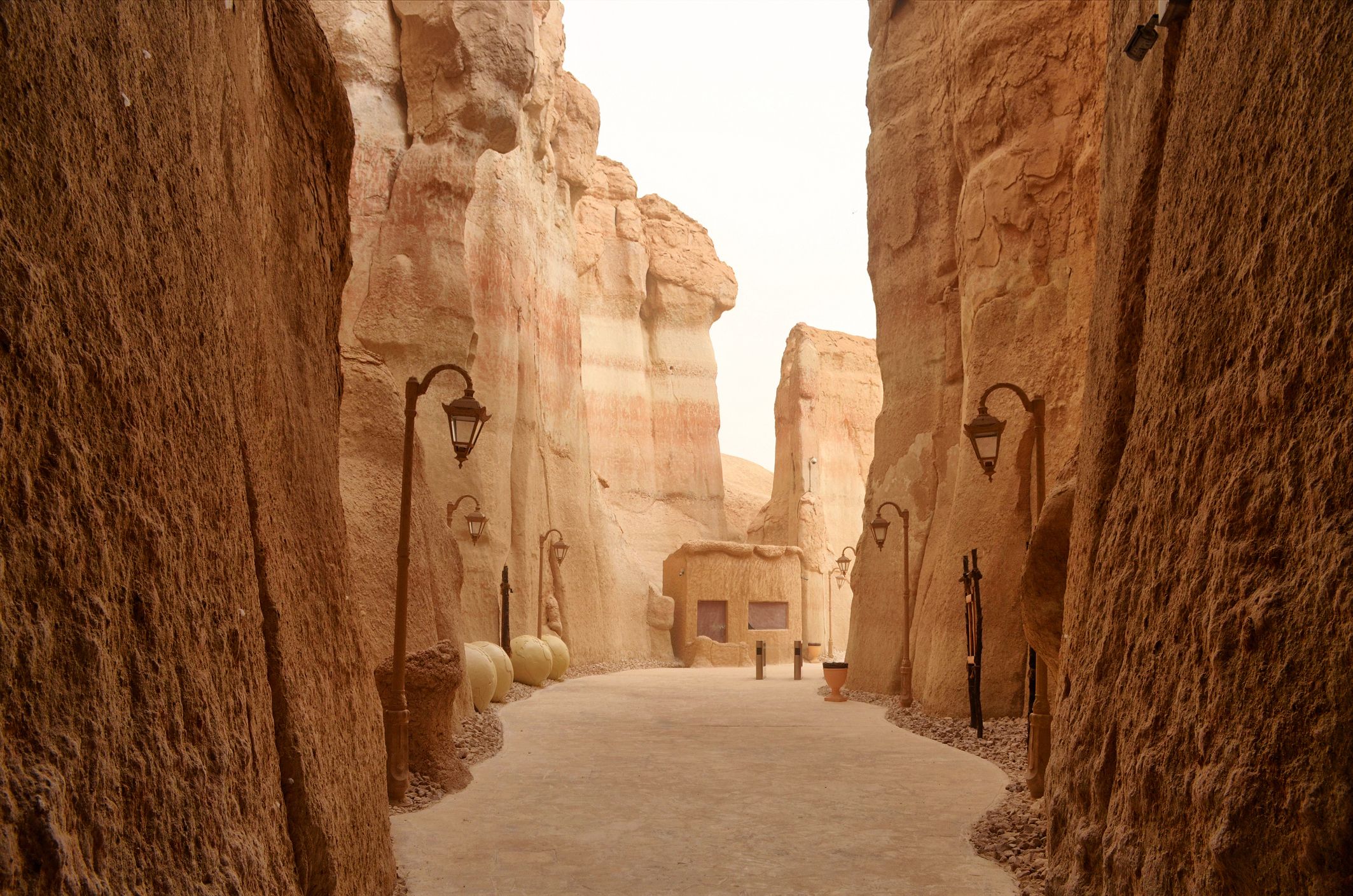
What draws people to the area? From Riyadh, the top excursion is a drive to the Edge of the World, a breathtaking 1,131-meter escarpment within the Tuwaiq Mountain range.
This adventure is not suited for those with weak nerves or even mild vertigo. The journey begins with about an hour’s drive from the city, where remnants of traditional conservatism become evident along the route. Eventually, you veer off-road, speeding through the desert sands, often racing others on the same path.
At one stage, the relentless bouncing through endless dust might feel interminable and far from ideal. Suddenly, the landscape reveals itself in jaw-dropping splendor. Many visitors witness a magnificent sunset; our group encountered a dramatic yellow haze amid a dust storm—striking in its own intense way.
A notable drawback is the absence of safety barriers. Reports indicate that recently, an individual accidentally drove their vehicle over the cliff while seeking the perfect sunset photo. Despite the risks, the experience justifies the effort. That said, it is advisable to leave children at home.
An Ambitious Cultural Initiative
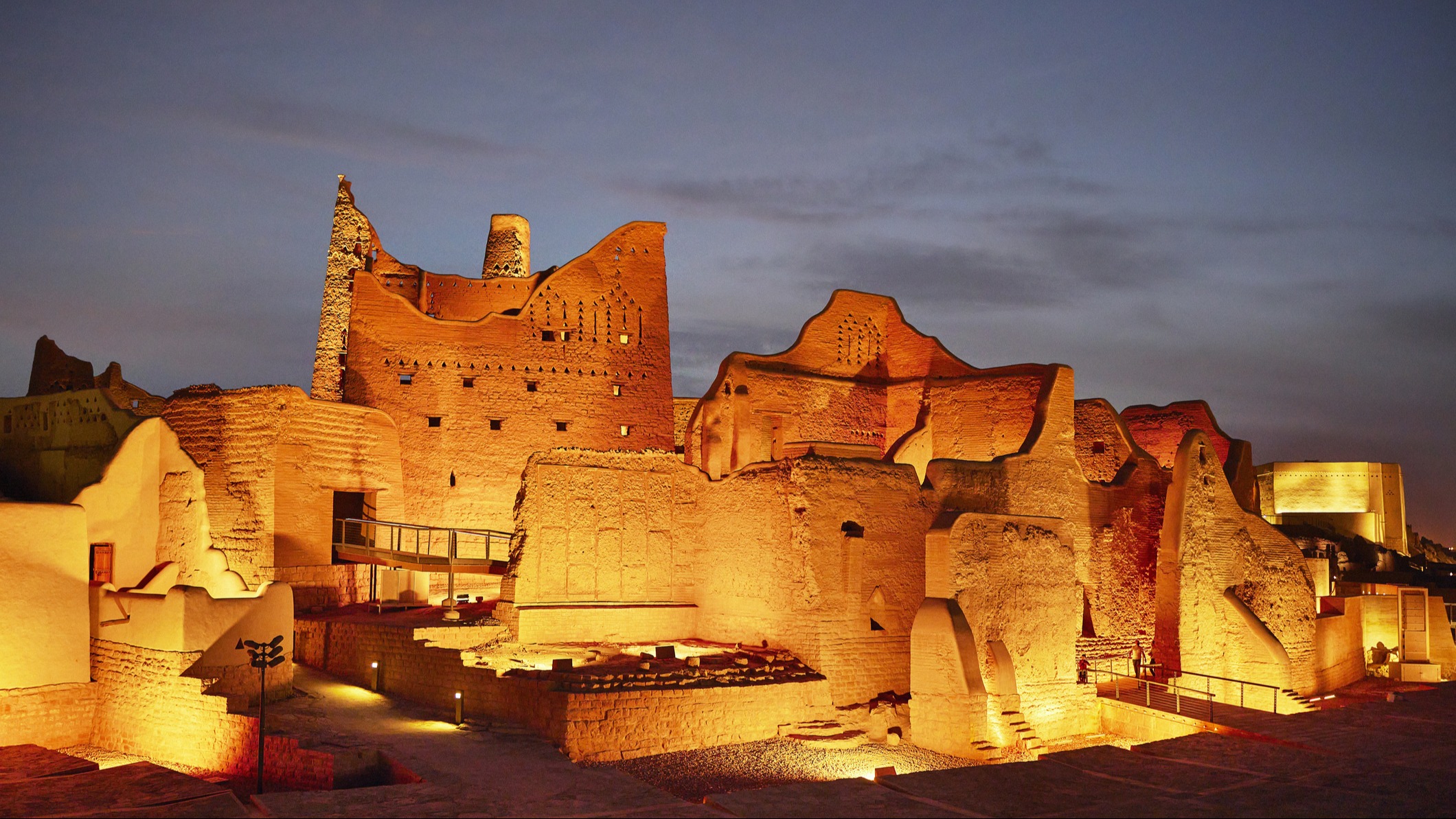
Another essential stop in Riyadh is Diriyah, the origin of the first Saudi state and site of the UNESCO World Heritage-listed At-Turaif district.
The surviving structures have undergone extensive restoration, and the area is evolving into one of Saudi Arabia’s grandest hubs for culture (complete with an opera house), tourism, housing, and commerce, all adhering to traditional Najdi mud-brick architecture.
Were Britain to embark on a similar heritage revival project, it would likely face endless criticism as a Poundbury-like imitation. In Saudi Arabia, however, it is celebrated as a vital preservation effort. The result is genuinely enchanting.
If possible, arrange a visit to the sales office for an insider’s perspective. The accommodating tourism and engagement director, Naif Awlia, guided us through the site, where detailed models of the completed vision prove nearly as captivating as the ongoing construction.
Do not miss the Al Rajhi Mosque, the city’s largest, which uniquely provides guided tours for non-Muslims.
Additional highlights include the Masmak Fortress, a pivotal site in Saudi Arabia’s 1902 unification struggle, and for those intrigued by darker history, a brief pass through Deera Square—familiar to expatriates by its grim nickname, Chop-Chop Square.
Dining options abound; we particularly enjoyed Thara for authentic Saudi dishes and Brunch and Cake, perched on Diriyah’s outskirts, for exceptional brunch experiences.
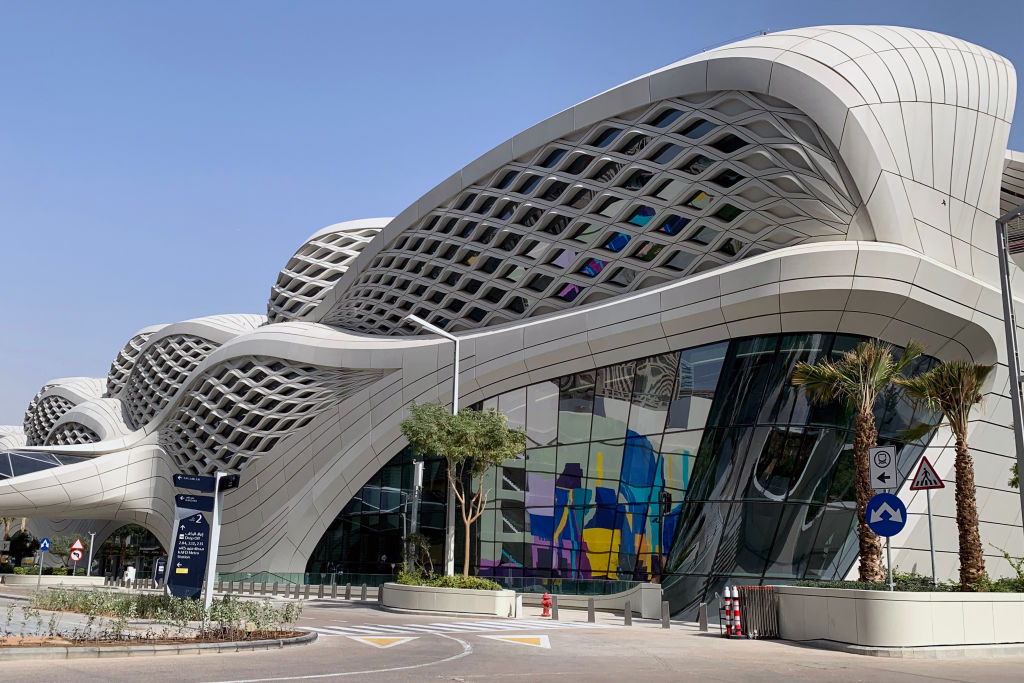
Conclude with a ride on the exquisitely designed metro system (women, remember to use the family carriage; others are designated for men). Head to the souk for souvenirs like camel-themed fridge magnets, intricately patterned kilim cushion covers, and—if you have not acquired enough—physical gold bars.
Our itinerary stayed within Riyadh, but extending to two or three days opens further possibilities. Proceed to AlUla for sustainable desert eco-tourism, featuring a luxurious Banyan Tree resort, then continue to the Jeddah coastal region. There, snorkeling and scuba diving amid Red Sea coral reefs complement an array of ultra-luxury accommodations.
Plan your trip promptly. Selfie-enthusiast influencers are beginning to appear at spots like the Edge of the World.
Nevertheless, this remains highly exclusive tourism. For those comfortable socializing without alcohol, visiting now grants pioneer status. Should Red Sea snorkeling near Jeddah soon include cocktail service, such bragging rights may vanish.