Dragonfly Raises $650M Crypto Fund Amid VC Shakeout
In April 2022, Rob Hadick finalized his agreement to join Dragonfly Capital and rented a property in the Hamptons. A non-compete clause from his previous role at the hedge fund GoldenTree required him to sit out for six months, so he geared up for some mandatory downtime in a serene rural setting. However, his intentions for a peaceful retreat quickly unraveled.
Soon after settling in, the cryptocurrency market plunged dramatically after the dramatic failure of the infamous stablecoin initiative known as Terra Luna. Hadick vividly recalls endlessly refreshing Twitter feeds as the crisis rippled through the sector. His wife phoned to check on his relaxation, to which he replied, “You might not grasp the extent of the damage to our financial standing right now.” He added, “I’m sitting here with whiskey in a pitch-black room at 2 p.m. on a Tuesday.”
His mandatory break concluded in November, coinciding precisely with another devastating blow to the crypto space: the downfall of FTX. Despite these upheavals, Hadick remained steadfast in his commitment to cryptocurrency. In a recent interview with Fortune from Dragonfly’s office close to New York City’s Union Square, he shared, “The industry events terrified me, but they also sparked excitement about the possibilities ahead, especially since we still had $500 million ready to invest.”
Dragonfly’s third fund propelled the firm to elite status within the cryptocurrency venture capital landscape, placing it alongside giants like Andreessen Horowitz and Paradigm. This success stemmed from forward-thinking investments in startups that have since exploded in value, such as Polymarket, Rain, and Ethena. Even as the crypto sector endures yet another harsh winter—marked by crashing token values and overshadowed by the surge in artificial intelligence enthusiasm—Dragonfly has unveiled its fourth fund, a robust $650 million investment vehicle.
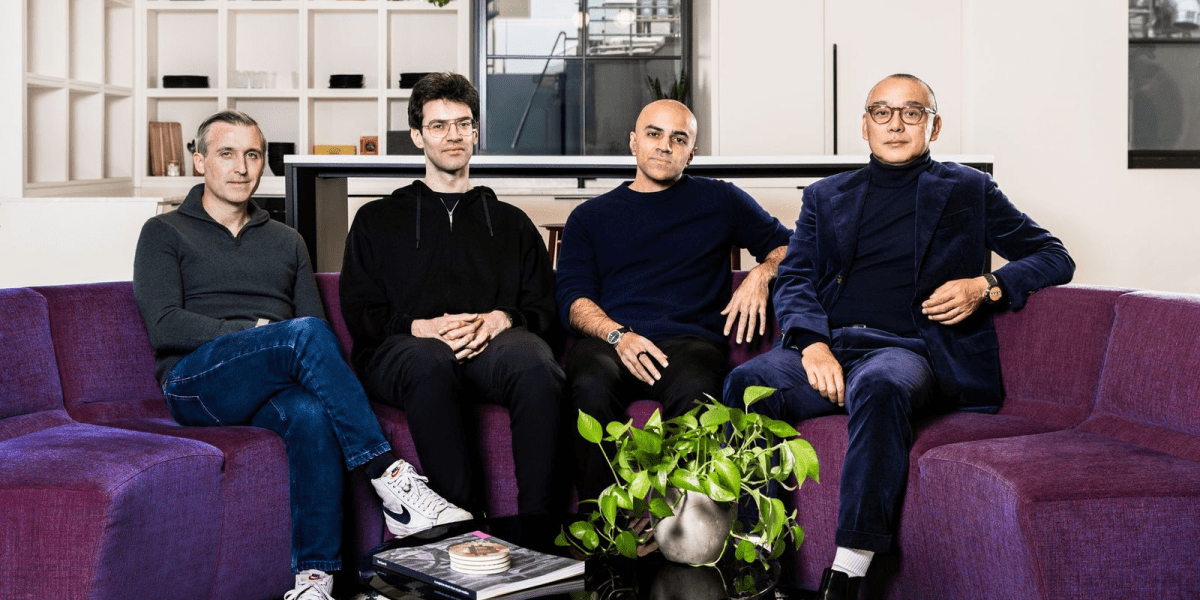
Hadick described the broader cryptocurrency venture ecosystem as undergoing a “mass extinction event.” Yet Dragonfly has not only survived but flourished amid challenges including a key partner’s departure, a regulatory investigation by the Department of Justice, and a strategic shift away from China due to intensifying crypto restrictions there. Central to the firm’s approach are its four key leaders working in harmony: Hadick, bridging traditional fintech; Haseeb Qureshi, serving as the sector’s ambassador; Tom Schmidt, the decentralized finance expert; and Bo Feng, the enigmatic founder who is a legendary figure in China’s technology arena. Qureshi reflected, “It’s surreal to watch us evolve into one of the established players now. We’re competing at a much grander scale than before.”
Origin story
Haseeb Qureshi began his professional poker career at just 16, primarily through online platforms since casinos barred him due to his age. By age 21, he had amassed nearly $2 million in winnings, yet he recognized that poker wasn’t his lifelong path. To commit fully to quitting, he wagered with a friend: any return to professional poker would cost him $100,000. “That bet was my definitive way to lock in the choice,” he explained to Fortune.
Qureshi credits his poker background with equipping him for cryptocurrency investing. Much like peers who dismissed his teenage poker pursuits as madness, his leap into crypto drew skepticism—particularly given his established reputation as a software engineer in Silicon Valley. He abandoned a high-paying position at Airbnb in 2017 to launch a stablecoin venture, well ahead of the stablecoin boom, and eventually connected with MetaStable, a then-$500 million venture fund.
These days, Qureshi stands as Dragonfly’s most visible representative, bolstered by his appearances on the widely followed Chopping Block podcast—crypto’s equivalent to All-In—and his influential commentary on Crypto Twitter regarding topics like the shortcomings of Web3 gaming or the strengths of blockchain product rollouts. Notably, he didn’t join Dragonfly at its inception but came aboard in 2019, during one of the industry’s typical extended slumps.
The early iteration of Dragonfly bears little resemblance to its present powerhouse status. It originated as a collaboration between Alex Pack, a promising venture capitalist handling crypto investments at Bain Capital Ventures, and Bo Feng, renowned for his prowess in China’s rapidly expanding internet sector. Feng, who chose not to participate in this interview, reportedly maintains ties to China’s political leadership, partly through his marriage to a granddaughter of Deng Xiaoping, the leader who rose following Mao Zedong’s passing.
Via his firm Ceyuan Ventures, Feng had backed the cryptocurrency exchange OKEx (subsequently renamed OKX), which held the title of the world’s largest exchange in 2018. Partnering with Pack, he targeted opportunities across the U.S. and Asia. An initial article in Bitcoin Magazine noted that Dragonfly’s inaugural $100 million fund drew support from Asia’s tech titans, including Sequoia China’s Neil Shen. Qureshi portrayed Feng not just as a conduit to regional financial heavyweights but as a “relationship savant,” despite his preference for staying out of the spotlight.
Dragonfly earned acclaim through stakes in entities like the exchange Bybit and the financial services provider Matrixport, alongside investments in fellow crypto venture funds as a fund-of-funds strategy. Upon joining, Qureshi outlined three prerequisites: ceasing fund-of-funds activities, taking charge of more direct deals, and expanding the technical staff. “Bo agreed to everything without hesitation,” Qureshi recounted. “He essentially handed me the reins, marking the start of the contemporary Dragonfly.” Among his initial actions was recruiting Tom Schmidt, previously the product lead at the decentralized exchange 0x, as an entry-level investor. Schmidt swiftly advanced to general partner.
The eventual parting with Pack, who later founded his own outfit Hack VC, has become legendary in crypto venture circles, although Qureshi minimizes the conflict. “We simply diverged on our visions for fund two and subsequent ones,” he noted. Pack described their initial fund with Feng as a “huge triumph” but acknowledged profound cultural mismatches. “I assisted in onboarding and training my successors for several months before we amicably separated,” Pack stated. Schmidt offered a more vivid characterization of Pack, linking the divide to clashing personalities.
By 2020, as Pack exited, Dragonfly confronted weightier issues. Largely owing to Feng’s influence, the firm’s administrative operations were based in Beijing. However, China’s escalating crackdown on cryptocurrency compelled Dragonfly to relocate its Asian activities to Singapore. Schmidt, fluent in Chinese and having opted for an internship at a Chinese firm during college over an early opportunity from Coinbase, emphasized that Dragonfly retains a solid footprint in Asia, even as regional investment prospects have dwindled. “Examine the user demographics of many blockchain networks and decentralized exchanges—they’re heavily Asia-centric,” he told Fortune. “Yet fresh investment chances aren’t as plentiful as in the past.”
Meanwhile, Dragonfly’s footprint in the U.S. crypto community expanded significantly. Larger competitors like Paradigm and Haun Ventures were securing funds exceeding $1 billion each, dwarfing Dragonfly’s more restrained second fund of $225 million, finalized in late 2020. Nevertheless, Dragonfly championed successes including the layer-1 blockchain Avalanche, the financial services entity Amber Group, and a stake in the contentious privacy tool Tornado Cash, which facilitates anonymous cryptocurrency transfers. The Tornado Cash investment thrust Dragonfly into national prominence in 2025 when authorities hinted at potential criminal charges against Schmidt in a money laundering probe. The Department of Justice soon retracted, which crypto enthusiasts hailed as a vindication, though Qureshi clarified the decision lacked ideological motives.
Hadick’s entry during the FTX meltdown elevated Dragonfly to unprecedented heights and crystallized its distinctive character.
The new era
Amid the 2021 cryptocurrency surge, innovators proposed ambitious blueprints to overhaul the internet using decentralized infrastructure. These efforts encompassed potential rivals to platforms like Twitter and Spotify. For crypto venture capitalists, such ventures hinged on tokenomics, where firms gained ownership of bespoke cryptocurrencies instead of conventional equity.
That expansive Web3 blueprint failed to fully materialize. Prior to FTX’s implosion, crypto’s trajectory was veering unmistakably toward Wall Street integration. Bitcoin emerged as digital cash, while Ethereum layered on capabilities for developers to craft decentralized apps for lending and trading. Investors like Hadick, rooted in conventional finance, foresaw crypto absorbing the full spectrum of banking and brokerage services. “We recognized the need for expertise beyond our own in that domain,” Qureshi explained. “Rob possessed the intellectual depth, broad knowledge, and track record we required.”
With Hadick onboard, Dragonfly targeted companies emblematic of today’s crypto paradigm. Ethena, for instance, developed a synthetic dollar yielding returns via intricate, hedge fund-style backend maneuvers. Now a frontrunner among stablecoins, Ethena’s concept was initially scorned as “madness” by most pitches, according to founder Guy Young. Detractors invoked the Terra Luna catastrophe, where the algorithmically pegged stablecoin’s collapse to below $1 nearly obliterated the industry. “It’s outrageous you’d propose this post-Terra,” investors rebuffed, Young recalled.
This pitch occurred mid-2023 bear market, and Dragonfly seized the moment. “They evaluated it from foundational principles,” Young praised. Dragonfly spearheaded Ethena’s $6 million seed funding. Within a year, Ethena secured $100 million, attracting backers like Franklin Templeton and Fidelity’s venture unit. Its primary stablecoin now boasts a $6.3 billion market cap.
The following year, Dragonfly supported Polymarket’s Series B, having narrowly missed its seed round years earlier. Qureshi revealed Dragonfly nearly led Polymarket’s 2020 seed when founder Shayne Coplan struggled to secure funding. “We were huge fans of him,” Qureshi said, despite unproven prediction markets then. Polychain’s superior terms swayed Dragonfly, who opted not to counter. “A clear oversight on our end, though our instincts were spot-on,” Qureshi admitted.
The crypto sector gradually embraced the notion that top digital asset firms would prioritize mundane financial instruments—akin to credit cards and money market accounts—over flashy blockchain games. Even Chris Dixon, the Andreessen Horowitz partner advocating Web3’s “read write own” ethos, recently posted on X that blockchains have entered their “financial era.”
Schmidt called this “the most profound shift I’ve witnessed in my career,” noting a pivot from myriad protocol-specific tokens to those mirroring real-world assets like equities and private credit. “Many crypto funds now rebrand as fintech specialists,” Hadick observed. “That’s precisely our stronghold.”
Blockchain’s deepening ties to traditional finance prompt debates on whether crypto abandons its rebellious origins against banks and state oversight.
Schmidt countered, “I strive to keep perspective: we grew digital internet money from nothing to a trillion in a decade. The mission continues, and global demand feels stronger than ever.”
Almost four years post-Hadick’s arrival, crypto venture capital grapples with fresh turmoil, deal volumes plummeting and limited partners hesitant to recommit capital. Armed with its new $650 million fund, Dragonfly stands poised to mold blockchain’s forthcoming chapter. “We speak candidly and share our views,” Qureshi asserted. “In an arena rife with hype, pretenders, and self-promoters, that authenticity proves a true advantage.”