Chinese Fine Dining Breaks Old Stigmas in Elite US Scenes
Taiwan-born chef George Chen, whose family relocated to Los Angeles back in 1967, still recalls with striking clarity the moment his classmates stared at his school lunch consisting of braised pork and Chinese sauerkraut sandwiched between two slices of bread.
“‘Oh, God, what are you eating? That’s gross,’” Chen recounted vividly during a bustling lunch service at his San Francisco establishment, China Live, situated right on the periphery of what is recognized as the country’s oldest Chinatown district. “And nowadays, everyone is clamoring for that braised pork and Chinese sauerkraut. It’s heartening to see that the perception of Chinese cuisine has evolved tremendously over time.”
The young immigrant who once felt compelled to conceal his lunches has since cultivated a distinguished reputation for delivering exceptional Chinese fine dining experiences throughout the Bay Area region. At China Live, Chen operates much like a masterful ringmaster, directing operations across multiple stations: one dedicated to crafting delicate dumplings, another featuring a stone oven where Peking ducks are meticulously roasted, a lively noodle preparation area, and even a dessert counter producing creamy sesame soft serve treats.
Amid these dynamic activities, he holds aspirations to resurrect his upstairs venue, Eight Tables, which previously offered multi-course dinners priced between $88 and $188 per person. Furthermore, alongside his wife Cindy Wong-Chen, they are in the final preparations to introduce a comparable high-end concept named Asia Live in the city of Santa Clara.
The Chens are far from alone in their endeavors to elevate Chinese culinary arts to new heights. Their location places them within easy walking distance of other renowned spots such as the well-regarded Empress by Boon, the celebrated Mister Jiu’s, and the more recently opened Four Kings restaurant.
Upscale Chinese American Establishments Gain Prominence Across Major Cities
Sophisticated Chinese American dining venues have proliferated from the vibrant streets of San Francisco all the way to the bustling culinary landscape of New York City in recent years. These establishments are generating significant excitement through their meticulously curated tasting menus that transcend the familiar boundaries of conventional Chinese takeout offerings. Numerous restaurants are innovatively reimagining classic Lunar New Year specialties to celebrate the upcoming Year of the Fire Horse, commencing this Tuesday. Crafting inventive reinterpretations of traditional Chinese dishes stands as a defining characteristic of their culinary philosophy, as a growing number of chefs are passionately driven to highlight and honor their rich cultural heritage.
Nevertheless, within an industry where patrons seldom challenge the steep costs associated with French haute cuisine or exclusive Japanese omakase experiences, operators of upscale Chinese restaurants frequently encounter skepticism when presenting their premium pricing structures. Despite such hurdles, these dedicated owners and chefs steadfastly maintain that their ingredients, meticulous labor, and time-honored cooking methodologies are every bit as deserving of recognition and value.
“Why shouldn’t we charge accordingly?” Chen asserts confidently regarding his establishment’s pricing strategy. “Is it merely because we’re located in Chinatown? Or because longstanding perceptions dictate that Chinese food should only be affordable? That notion simply doesn’t hold up under scrutiny.”
Empowering Chinese Chefs to Authentically Present Their Heritage
Since the husband-and-wife duo Bolun and Linette Yao unveiled Yingtao—named in tribute to Bolun’s cherished grandmother—in New York’s energetic Hell’s Kitchen neighborhood back in 2023, they have been forthright about their core objective: establishing “contemporary” Chinese cuisine as a refined and elegant dining paradigm. This Michelin-recognized gem presents a $150 chef’s tasting menu that has captivated discerning palates.
“We are actively working to dismantle this ingrained bias, this limiting boundary that confines people’s understanding of Chinese food to Sichuan specialties, Cantonese classics, or the ubiquitous takeout container,” explained Bolun Yao, who expresses profound admiration for the casual Chinese takeout spots that serve communities daily.
Having completed a master’s degree in food studies at New York University, Yao was determined to forge a meaningful connection between age-old Chinese traditions and the sophisticated fine dining landscape that New Yorkers hold dear.
Emily Yuen, who earned recognition as a James Beard Award semifinalist just last year for her innovative Japanese American dishes at Brooklyn’s Lingo, has joined forces with Yao as Yingtao’s new executive chef to advance this vision. For Yuen, a Chinese Canadian whose formal culinary training heavily focused on French techniques, the significance of authentic representation—from the diverse team in the kitchen to the thoughtfully composed plates—has remained a guiding principle throughout her career.
“I yearned to reconnect with my roots and delve deeply into that aspect of my identity,” Yuen shared thoughtfully. “I was profoundly moved by his (Bolun’s) mission statement; it resonated deeply with my own desire to uplift Chinese culture and cuisine on a grander stage.”
She delights in experimenting with everyday favorites, such as the iconic Cantonese custard egg tart known as “dan tat,” transforming it into a luxurious savory delight topped with caviar and delicate quail eggs. “It’s egg layered upon egg upon egg,” Yuen described with enthusiasm.
In a parallel effort, Ho Chee Boon, the acclaimed Michelin-starred chef who revitalized the historic Empress of China in San Francisco into the modern Empress by Boon back in 2021, is championing the acceptance of Chinese cuisine as legitimate fine dining within the United States. Hailing from Malaysia, Boon grew accustomed to encountering premium Cantonese fare during his travels across China and India.
“My aim is to make a meaningful contribution to Cantonese cuisine and our broader culture, particularly for younger generations to discover and appreciate, as well as for others outside our community to gain awareness,” stated Boon. He has successfully expanded a collection of his upscale Cantonese Hakkasan restaurants spanning from Dubai to Mumbai and various locations across the U.S.
“We have the opportunity to elevate standards here,” he continued, “and encourage more visitors to rediscover the vibrancy of Chinatown.”
The Complex Historical Context of Chinese Cuisine in America
The reception of Chinese culture and its culinary traditions in Western societies has experienced significant fluctuations over the centuries. More than two centuries ago, European nations coveted Chinese exports such as exquisite silks, finely crafted ceramics, and premium teas, noted Krishnendu Ray, who directs NYU’s doctoral program in food studies.
However, China’s military defeat at the hands of the British during the 19th-century Opium Wars shifted global perspectives, portraying the nation “as a poor country,” according to Ray. When Chinese laborers arrived in the U.S. to construct railroads, pernicious racist stereotypes portraying Chinese people and their food as bizarre and unclean became entrenched, confining communities to segregated enclaves.
These outdated prejudices linger even into the present day, continuing to affect Asian American dining establishments through persistent, weary tropes.
Ray observes that the elevation in prestige for any “ethnic” cuisine often aligns closely with the corresponding economic ascent of its originating nation. Analyzing Michelin’s New York City guides, which spotlight between 300 and 400 top restaurants annually, Ray documented an increase in references to Chinese regional cuisines from 3% to 7% between 2006 and 2024.
“It’s truly remarkable that these exceptional restaurants have emerged in Chinatown now,” remarked Luke Tsai, the food editor for San Francisco Bay Area’s PBS station KQED. “It’s perfectly acceptable if someone doesn’t find the value proposition compelling. That said, I’m genuinely thrilled that these venues exist and are thriving.”
Rejecting the Fusion Label in Authentic Chinese Fine Dining
A chorus of Chinese chefs emphatically clarifies that their offerings do not constitute fusion cuisine—nor dishes merely infused with Asian elements. Their approach represents “more of an East-to-West progression rather than a West-to-East hybridization,” as Chen from China Live articulates it. Yuen from Yingtao echoes this sentiment, warning that such labels only breed unnecessary confusion.
“Fusion cuisine often evokes those dimly lit spots serving trendy cocktails,” Yuen observed. “Our focus is purely and authentically Chinese.”
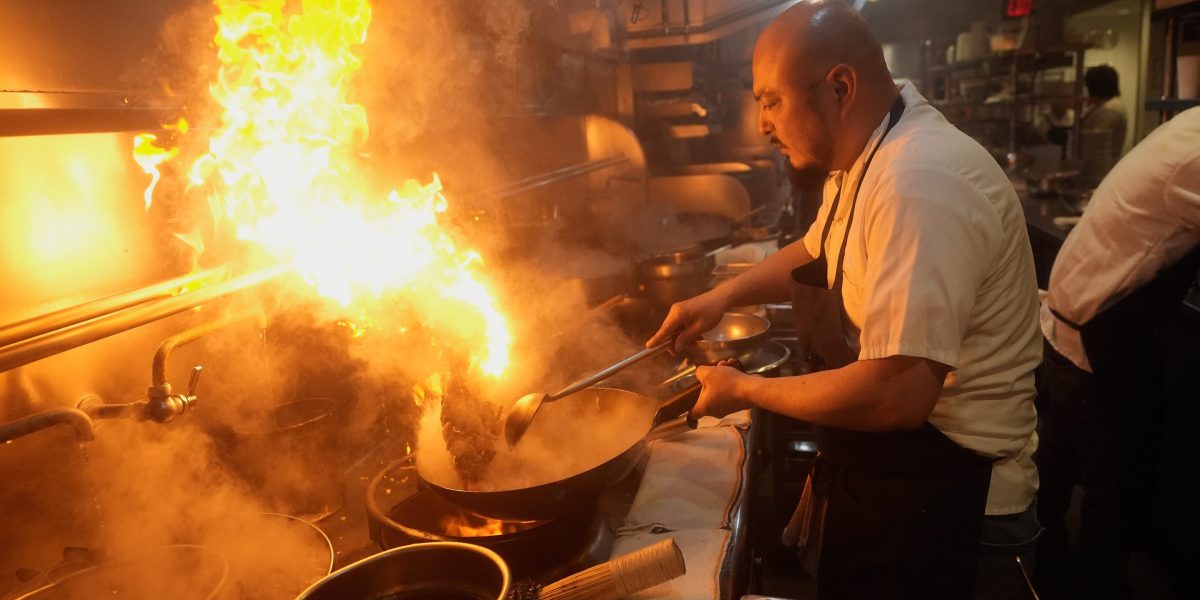
Central to these chefs’ philosophies is the faithful integration of traditional Chinese cooking methods, eschewing reliance on European techniques. At Empress by Boon, chef Boon and his team operate four dedicated wok stations equipped with authentic woks imported directly from Hong Kong.
“We strive to replicate every operational detail precisely as tradition dictates,” Boon emphasized. “We honor the classics while presenting them through a contemporary lens.”
Chen takes particular pride in his open-kitchen design, allowing guests to witness the dynamic use of woks and clay pots in action. These tools embody cooking practices drawn from diverse regions across China.
“When you examine the vast array of culinary traditions within China, and you possess the space to demonstrate them fully, you can truly illuminate the depth of the cuisine,” Chen reflected. “This approach has proven immensely successful for us.”